Hello, everyone.
This is Enta.
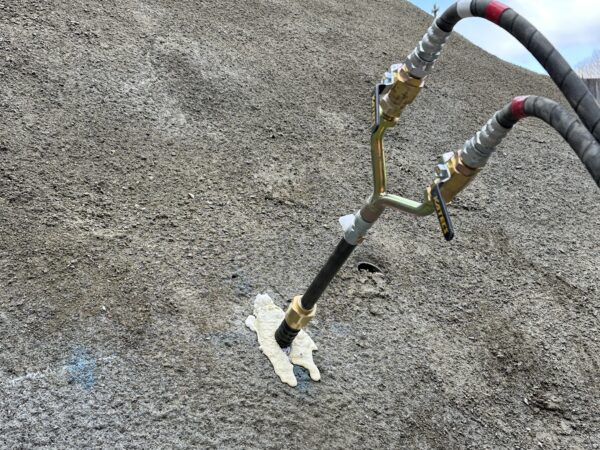
I did my first installation the other day.
I can't go into too much detail, but it's the NATM method, lol.
It's that thing they often use in tunnels and such.
Inject at a pressure of approximately 2 MPa; it takes about 1 minute to set (gel time) (at an ambient temperature of around 20 degrees Celsius).
Plus, it cures thoroughly even underwater, so it’s a product that provides perfect waterproofing!
We constructed it using a standard slope.
Since I'm not a tunnel worker, this is a really great experience.
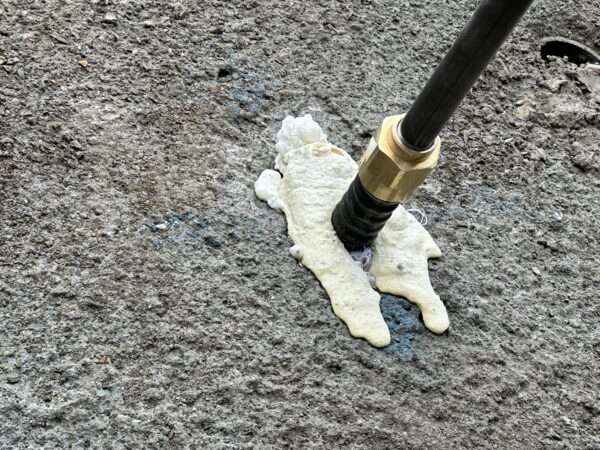
The opening around the mouth is sealed to prevent spillage, but since the bottom was blocked, the liquid rose to the top and leaked out a little.
It's already hardened because it's reacted, but it's harder than I expected!
Even when I hit it with a hammer, it didn't budge at all. I wondered if it would dent, but it didn't even dent.
It’s firm yet springy, so it’s very effective.
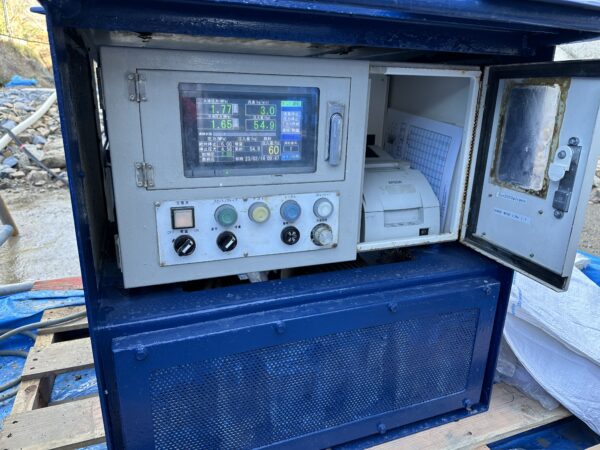
The solution itself is thinner than grout, so it flows in quickly.
(Since we carefully monitor the flow rate, flow velocity, and injection pressure, management is quite easy.)
Even if it keeps pouring in, since the clay spreads out thinly and expands from the inside out, it has a significant impact on cracks and the like.
However, since it is not as strong as grout, you cannot expect it to provide surface friction or resist pull-out.
Learning a new construction method is an incredibly valuable learning experience.
I’d really like you to know more, but since it’s a construction site I can’t talk about, I’m bound by confidentiality—that’s all I can say, lol.
If you only work on slopes, you really are like a frog at the bottom of a well.
It was a great learning experience, and it made me think that by learning more about other construction methods, I might be able to apply them to slope stabilization as well.
See you later.