Hello, everyone.
This is Enta.
For some reason, ever since the other day,My mood is ↓↓↓ lol
There are good times and bad times.
I want to be able to keep my head up even in times like that.

But that's beside the point.
Someone asked me, "What determines the drill hole diameter?"
So, I’d like to try to explain why that’s the case.
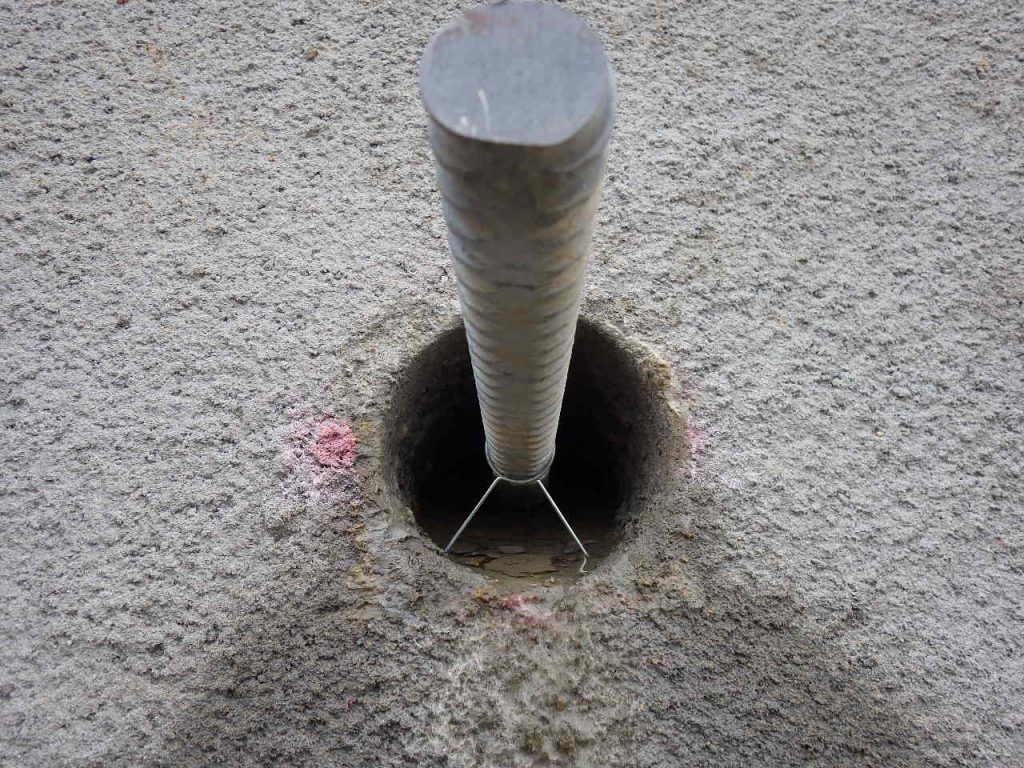
Types of Drill Hole Diameters
45 mm: Manual drilling using a rock hammer or rock drill (Site Condition III)
45, 50, 65 mm: Self-tapping bolts—same for both manual and machine installation (Site Conditions III)
65 mm: Suspended type, skid type (Site Conditions I and II)
90 mm: Double-pipe drilling, skid-mounted (excluding market unit price)
115 mm: Double-pipe drilling—for rebar with a diameter of D29 or larger (excluding market unit prices)
That's pretty much how it is.
*The "skid-type" method is also known as a "fixed-type" method, in which scaffolding is erected and the work is performed from that platform.
Reasons for Selecting the Drill Hole Diameter
For 45 mm
Most of the drilling is done by hand using manual drilling methods, but this is a narrow lot.
The same applies to steep slopes. This is because it is impossible to bring in machinery when a private residence is located directly behind the site.
For Self-Drilling Rock Bolts (45, 50, and 65 mm)
As with the above, this applies to manual drilling on narrow sites using the skid method, and to mechanical drilling using suspended or skid-type rigs when the borehole walls cannot stand on their own.
However, because this method does not allow for the creation of a solid anchorage during grout injection, it has been replaced with a double-pipe system.
For 65 mm
The target is rock where the drilled hole remains stable and the borehole wall does not collapse.
For 90 mm
This applies to excavated rock masses that are not self-supporting and where it is expected that reinforcing bars cannot be inserted or are difficult to insert.
For 115 mm
For use with special rock bolts where the diameter of the embedded rebar is D29 or larger and a coupler is used
In the end, the main reason is almost always that the coupler won't fit.
It's easier to make design changes once you understand the rationale behind the selection.
Once you understand the rationale behind the design, you'll find that making design changes is surprisingly easy.
For example, if it is known from the outset that bolts cannot be inserted because the rock mass will collapse even if a hole is drilled,
We will conduct a trial installation and make adjustments.
Furthermore, if the diameter is changed from 65 mm to 90 mm, the change in bore diameter will increase the area subject to circumferential friction.
Since it reduces friction significantly, it means it can be kept short.
However, please note that this will vary depending on how deeply the roots have penetrated the compacted soil.
Be sure to recalculate whenever design changes are made.
Also, since it's not an anchor, it doesn't tend to get extremely short that often.
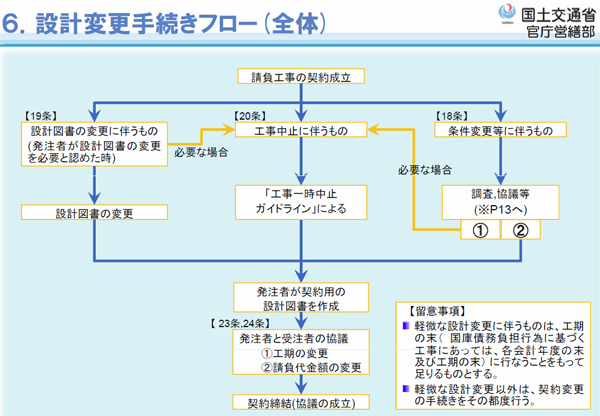
Test construction in accordance with the design → Inspection and approval by government officials → Submission of a document outlining the reasons for the design change → Submission of cost estimates and quantities resulting from the design change → Design change
This is the general idea.
If you're having trouble with your calculations, please feel free to contact me. I might be able to help.
After all, it comes with software from the Big Five developers, lol.
The items required for this are a complete set of drawings (data) and the design calculations.
It doesn't matter which one you use for the calculation.
See you later.
Manufactured and Sold by Wakazono Seisakusho
Bolt Scales, Clip Spacers, and Greening Spacers
Please see below for inquiries and retail locations.
Natural Applied Sciences, Inc.
(Slope Greening Materials Group)
Phone: 052-212-1441
Koiwa Wire Mesh Co., Ltd.
(Contact the Chubu Branch)
Tel. 0568-75-7710
Showa Co., Ltd.
(Kagoshima Prefecture)
Tel. 099-296-1234
Fujiwara Industries Co., Ltd.
(Bolt scale only)
Phone: 06-6683-0797
Ura-Tsuji Industries, Inc.
(Shimane Prefecture)
Phone: 0852-24-6881