Hello, everyone.
This is Enta.
It's gradually getting colder, but at the same time, it's getting hot again lol
Are you taking good care of your health?
Let's get a good night's sleep and get ourselves in top shape!
But that's beside the point.
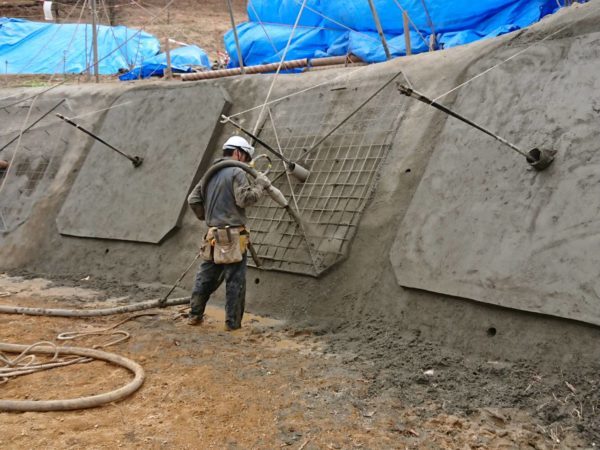
You know this, right?
That's right!
That's a zabuton frame, isn't it?
So, do you know what this "zabuton" frame is for?
It is commonly used when installing ground anchors.
A slope stabilization contractor is doing the work, but why are they installing this?
Do you fully understand this?
What about the director?
Can you clearly explain what a "zabuton frame" is?
If you ask that question, most people would probably say “leveling.”
That's exactly right lol
As you can seeLeveling Uneven GroundI am doing that.
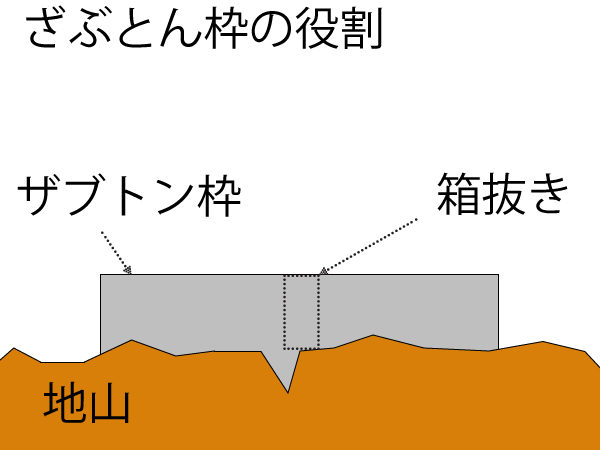
*View from directly above*
Its role is to level out unevenness in the natural ground, making it easier to install the load-bearing plate and ensuring that the anchor force is effectively transferred to the natural ground.
There's one more.
So, what could it be?
Directors absolutely must know this!
That is,Angle AdjustmentThat's it.
Vertical directionAngle AdjustmentI'm sure you understand, but,Horizontal angleWe'll adjust that as well.
It should be fine since you can adjust the angle with the angle-adjustable base!!!
Many people think that, but actually, the maximum adjustment angle of the angle-adjustable base is about 20 degrees.
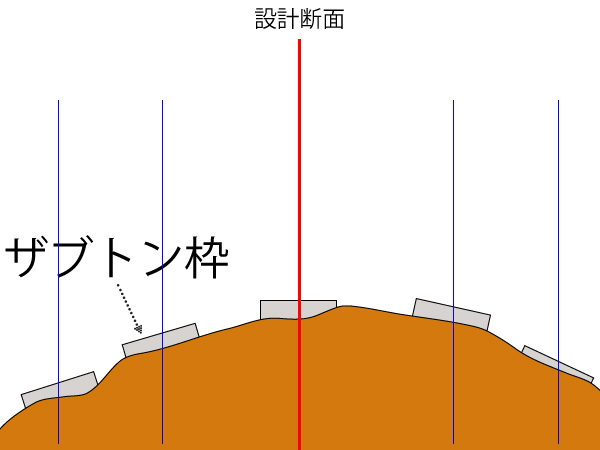
If the anchor is straight in the direction of the main survey line, a horizontal slope is required if the mountain is curved.
If this happens, as described above, construction becomes extremely difficult, and in the worst-case scenario, the load-bearing structure could shift out of place.
The anchor direction and the angle of the zabuton frame must be aligned as horizontally as possible.
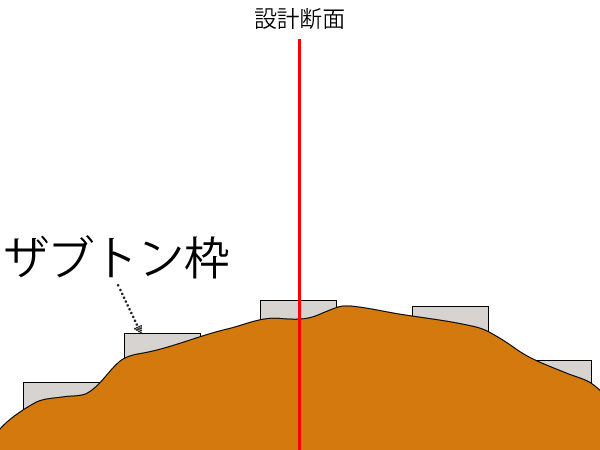
If you do it this way, it will be easier to install the pressure plate.
Furthermore, since no horizontal forces are applied to the bearing plate, there is no issue with applying the design load.
*If the force is transmitted horizontally, the load must be increased by an amount equal to the angle.
Since the zabuton frame is already included in the design, let's go ahead and adjust the horizontal angle as much as possible while we're at it.
Doing so will dramatically improve the efficiency of anchor installation.
Please don't assume that everything will be fine just because there's an angle-adjustable base.
Even when using the angle-adjustable base, you should actually set it at about 10 degrees, and use the zabuton frame to adjust the rest.
You could probably do the work even at 20 degrees, but it's not a good idea.
Do you understand the role of the zabuton frame?
Its role is to be installed so that it integrates with the natural ground while effectively transferring the force of the ground anchor system to the natural ground.
By the way, even if the zabuton frame cracks slightly due to pressure, it’s not a problem as long as it has settled in.
This is strictly a backfill treatment. Strength equivalent to that of the natural ground is sufficient.
See you later.