Hello, everyone.
This is Enta.
When I go out to inspect slopes, the thing I pay attention to is bamboo.
Well, it's not just bamboo, but you can get a rough idea of the soil conditions based on the plants growing there.
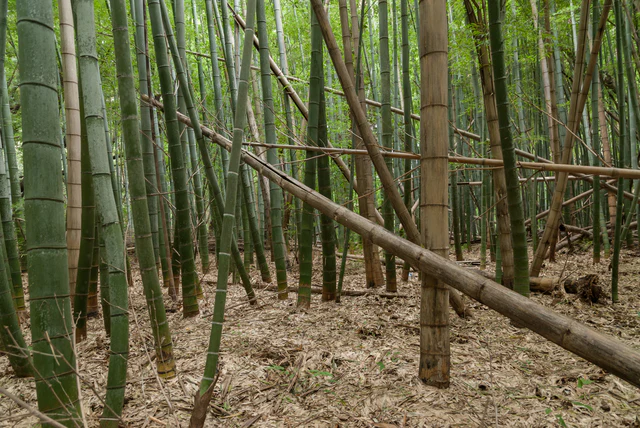
"Bamboo groves = a sign of surface water retention"
"Willows and alders = signs of valley bottoms and high groundwater levels"
"Reeds and sedges = a sign that water is pooling on the ground"
| Types of Plants | Typical Examples | An easily accessible location | What this means |
|---|---|---|---|
| Bamboo Species | Moso bamboo, Madake bamboo | Valley bottoms, foothills, and damp slopes | The topsoil is moist, and the roots extend to a depth of about 1 to 2 meters. |
| Willow Species | Weeping Willow, Mud Willow | Along rivers and streams | Terrain with a high groundwater level where water tends to pool |
| Alder | Alder | Wetland forest, former rice paddy | Indicates a wetland or poorly drained area |
| Yoshi (Reed) | Okay | Marshes, riverbanks | Signs of standing water on the surface |
| Sedges | Cyperaceae family, genus Cyperus | Rice paddy ridges, damp lowlands | An environment where the ground is constantly damp |
| Apiaceae | Serri | Along the waterway, in the wet fields | Evidence that clear water is springing forth |
| Zenmai and Warabi | Wild vegetables | Valley bottoms, damp slopes | Moist Areas and Water-Retentive Mountainous Regions |
| Tokusa | Tokusa | Along the river, on damp sandy ground | Reflects the groundwater level |
| Frogs | Dwarf Cattail, Cattail | Ponds and Waterfronts | Indicates a harsh wetland environment |
| Other | Dokuzeri, Mitsugashiwa | Wetland | Indicator Plants for Wetlands |
*This is for reference only.
What We Can Learn from a Bamboo Grove
1. Characteristics of the Soil Environment
-
Soil with a high water content
Bamboo requires large amounts of water to grow. Therefore, areas where bamboo groves are found often have a relatively high water table and moist soil that easily retains rainwater. -
Water retention is concentrated in the surface layer
Bamboo roots (rhizomes) tend to spread horizontally, but they generally grow to a depth of about 1 to 2 meters. As a result, they rely heavily on moisture in the topsoil, indicating that the soil near the surface has high water-holding capacity.
2. Ground Stability and Risk
-
Surface Compaction
Because the roots spread out shallowly, they help stabilize the soil surface to some extent and prevent topsoil erosion. -
Deep Instability
Conversely, since roots cannot reach depths greater than 2 meters, this method is largely ineffective in controlling groundwater flow or preventing ground collapse in deeper layers. Special care must be taken to ensure slope stability.
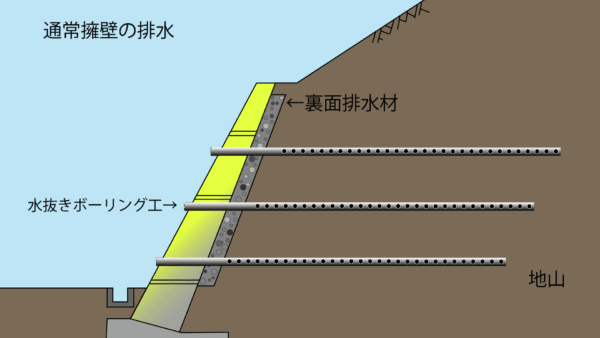
3. What construction method should we consider?
-
Drainage and Water Removal Measures Are Important
Since water tends to pool on the surface, I believe that borehole drainage will always be necessary for retaining wall and slope stabilization projects. -
Understand the depth of the roots before beginning construction
When driving anchors or piles, it is important to take into account the “compaction at the ground surface” and “weakness at depth” by referring to the depth at which bamboo roots are distributed. If possible, cut down the bamboo and install bolts and drainage.
Bamboo groves are a sign of “moist soil with a high water content near the surface,” and since their roots are relatively shallow—reaching only about 1 to 2 meters—it can be said that “while they contribute to the stability of the ground surface, they do not contribute to the stability of the deeper soil layers.”
Therefore, when you see a bamboo grove, you can interpret it as indicating “waterlogged soil” or “be mindful of stability at deeper levels.”
If you look at the situation from that perspective, you’ll be able to see it from a different angle.
Well, there are times when there’s a bit of an artificial element to it, though lol
See you later.