In the Japanese manufacturing sector, the millimeters (mm), centimeters (cm), and meters (m) are used.
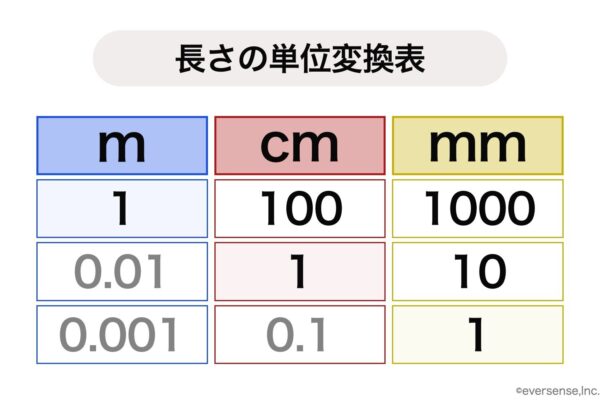
The unit of measurement may vary depending on the situation. . If the distance is long, the unit is m; for short distances, use cm, and ㎜ are used.
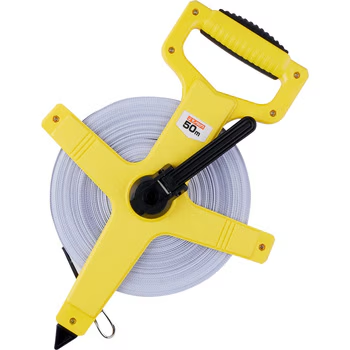
Tape Measure (Makijaku)
Tape Measure A measuring tool used in Japan measuring tool used in Japan, and it is used . In this case, the unit “m” is used.
Whether it's mm or cm if you say “mm” or “cm,” feeling of confusion.
We conducted “Slope Construction” When surveying the area, use a tape to measure the area in meters. .
For example, 10.53 m is is 1,053 cm and 10,530 mm.
As the number gets bigger, it becomes it becomes difficult to understand. If it’s more than 10 m, that’s 10,000 mm! It can be confusing.
Therefore, when measuring long distances meters is appropriate .
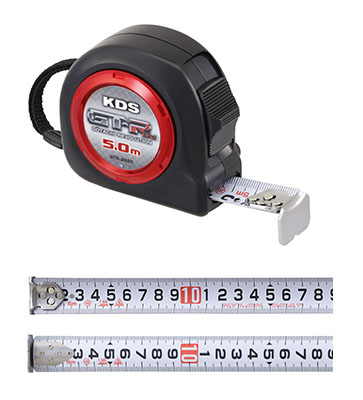
Convex Rule
“Convex Rule” The scale used in Japan is less than 6 meters is used to measure distances .
At this time, people say "m" or "cm" as well. It can also be measured in mm.
A unit that’s easy to understand for yourself Even if you’ve tried it, it is spoken in a simple unit , you must be able to make changes .
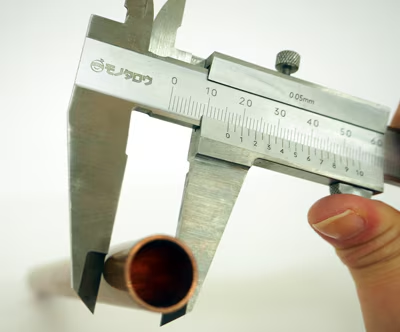
Calipers / Bernier Calipers (Calipers)
“When using a ”vernier caliper,” measurements are usually taken in mm are used for measurement. Here, it is rare to use the “m” unit.
When measuring the object, use mm It is easy to use.
Table of Equivalent Forms
Please read this table carefully . For example, 1 cm = 0.01 m. 1 cm = 10 mm.
If you want to understand the meaning of the table , then, compared to a ruler (scale) is easier to understand when compared to a ruler .
Division of the Ruler, Part 1 -Practice counting one by one .
Object (वस्तु) It is extremely important is a very important Especially for manufacturers like us , this is an absolute requirement.
Static Measurement of Various Objects You must be able to measure them. 100% Learn until you fully understand.