

In Japan, where construction is prohibited, the units ㎜ (millimeter), ㎝ (centimeter), and m (meter) are used.
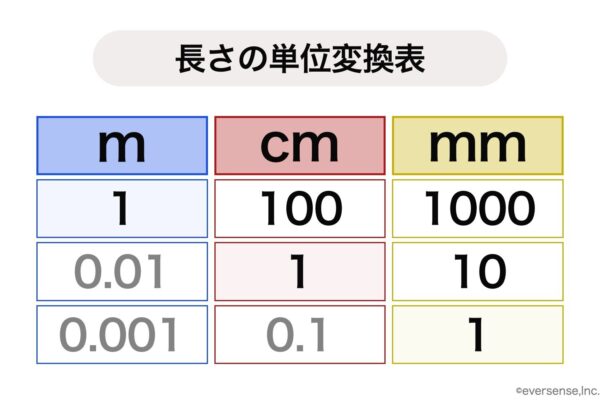
The unit used depends on the situation. For large measurements, “m” is used; for medium-sized measurements, “cm” is used; and for small objects, “mm” is used.
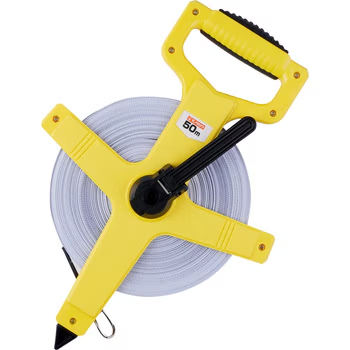
Tape Measure (Makijaku)
A “makijaku” (tape measure in Japanese) is used to measure long distances, and the unit “m” is commonly used.
When measurements are given in mm or cm, there is a possibility of confusion or error.
In our work on “slope construction,” when we measure the site, we use a tape measure and measure in “m.”.
For example, if the measurement is 10.53 m, it would be 1,053 cm in centimeters and 10,530 mm in millimeters.
As the number gets bigger, it becomes harder to understand. If it goes past 10 m, that becomes 10,000 mm—it’s hard to wrap your head around, isn’t it?
Kaya, when the distance is long, let's use “m.”.
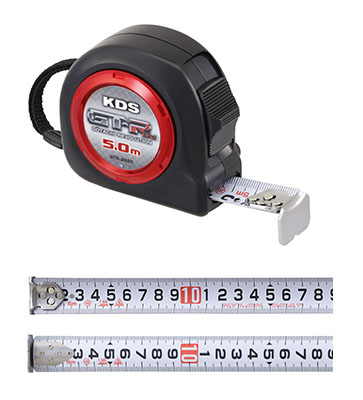
Convex Rule (Convex)
The “convex” (convex rule or scale) is used to measure distances of less than 6 meters.
In cases like this, some people use "m" or "cm" depending on what's most convenient. Of course, you can also measure using "mm.".
No matter what unit you use, it’s best if you can quickly understand it and convert measurements right away.
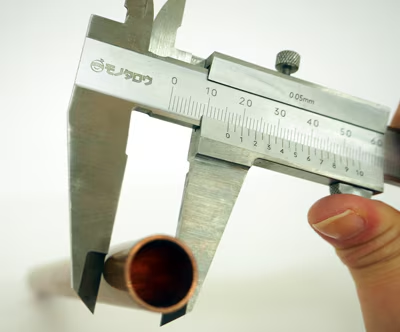
Vernier Caliper
When using a “vernier caliper,” the unit of measurement is almost always ㎜. It is extremely rare for anyone to use “m” with this type of instrument.
If the measurement is small, it’s clearer to use millimeters.
Conversion Chart by Yunit
Please make sure to keep this conversion chart handy. For example, 1 cm = 0.01 m and 1 cm = 10 mm.
If you're having trouble reading the chart, try looking at a ruler while examining it—it will make it easier to understand.
Try counting each mark on the ruler to get the hang of it ^^
Measuring things is extremely important. Especially in the construction industry, it’s an essential skill!
We need to accurately measure the different sizes of objects. Make sure you understand this 100%!