Hello, everyone.
This is Enta.
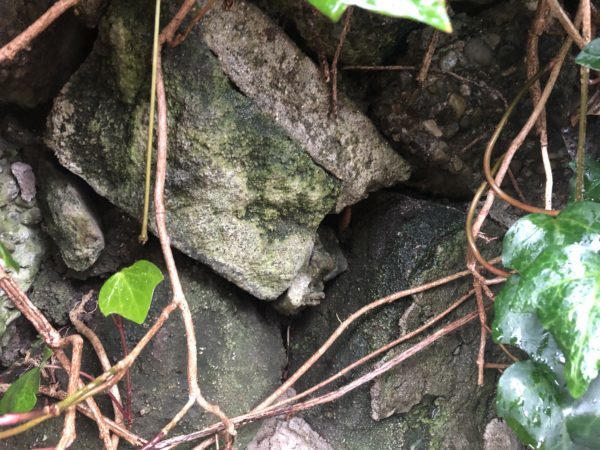
Lately, we've been receiving more inquiries about private construction projects.
So I’ve put together a list of the problems I often hear about. (Based on what I’ve heard from clients.)
Well, I think those involved in public works projects understand this well, so I suppose it’ll be fine, but,
Of course, there’s a significant proportion of unscrupulous contractors out there.
I'm writing this so you don't get scammed by unscrupulous contractors.
Precautions When Obtaining Quotes (Selecting a Contractor) for Cliff (Slope) Construction Projects
1. Get a rough idea of the construction volume (area).
2. Does the estimate cover the entire project?
3. Are there grounds for reviewing the construction method?
4. Can you explain the construction process?
5. Please make a decision by the end of this month!
6. This could collapse at any moment... (It's worrying.)
7. I have only ever worked as a second-tier subcontractor or lower on public works projects.
8. Is there a director?
9. Are there any qualified personnel (civil engineering construction management)?
10. Does it make a good impression?
------------------------------------------------------------------------
Is that about right? lol
I'll explain them one by one.
Explanation

1,It's impossible for there to be no quantity.
Since they should have done a preliminary survey and provided an estimate, a contractor who doesn't even have a rough idea of the quantities is a bad choice.
2,This is a tactic often used by contractors who aren't good with numbers.
We include items in a "all-inclusive" quote when we can't list them individually.
Since this represents only a very small part of the work, it’s risky to rely on an estimate that covers everything with just this.
3,If you can't explain why this construction method was chosen, it means you didn't even bother to compare options—you just thought, "Well, I guess this will do."
That's probably how it is. In other words, they're contractors who make their selections based solely on experience, without any knowledge of the design.
There must be a reason for the price increase. Be sure to ask for the design calculations and other documents as well.
4,If they don’t understand the entire process—including what needs to be done, how long each step will take, the sequence of operations, and where to set up temporary facilities—they’re just a contractor with a crew of skilled workers.
5,You absolutely must not prioritize sales quotas and the like. That shows you’re only thinking about your own company.
6,Businesses that try to stir up anxiety are no good either.
We need a reason to explain why it will collapse if we don't start construction right away, but no one knows for sure whether it will actually collapse.
Mountains that haven't collapsed due to typhoons and rain are likely to be safe for now (though with continued weathering, who knows what might happen eventually??)
7,In public works projects, a "second-tier subcontractor or lower" refers to a contractor that cannot perform construction work without supervision.
If there is no supervisor, the construction work will be carried out by trial and error based on experience, so it is unlikely that any problems will be addressed.
8,This is extremely important. The director is responsible for handling any issues that may arise.
Whether or not there is a supervisor makes a world of difference in construction quality, how residents are treated, and other aspects of the project.
Ultimately, the client will be the one to suffer.
9,It's actually the same as No. 8, but having this experience increases your chances of being considered an experienced person. (Though there are plenty of "paper" directors out there, lol.)
10,There are some arrogant people out there, aren't there? lol They say weird things all the time. Just trust your own judgment when it comes to people.
I think there are some things that even the sales representative who came to inspect the site might not be aware of.
In cases like that, it's best to talk to the construction manager.
If the construction cost is going to be quite high (3 million or more), I think it’s a good idea to consult with a major contractor.
It's also an option to set up a meeting with a major player in the industry and have them introduce you to subcontractors.
Cliff work, for example, is considered a specialized type of civil engineering project.So there's no point in consulting a local construction company about this.
In particular, if you consult a local contractor, you might end up with a strange design—one that seems to be based on no real rationale and is just a way to get the job done.
Please be very careful.
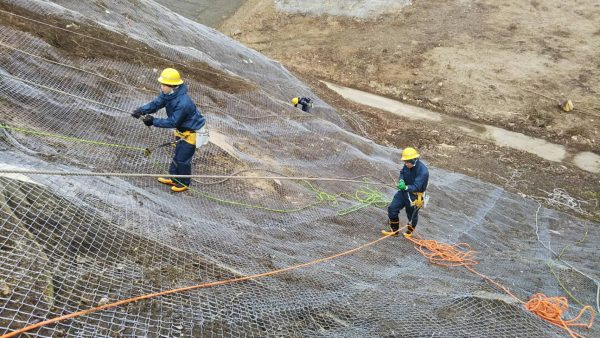
Please hire a contractor with a proven track record for cliff (slope) work.
As a general rule of thumb, if you're a general contractor or a first-tier subcontractor on a public works project, you should generally be fine.
I think it would be best to talk to about five companies.
If there were two good contractors, I’d probably be torn, lol.
Please be careful, as there are some front companies run by the yakuza.
By the way, please be aware that if the client is arrogant, there’s a high chance your proposal will be rejected.
No matter how much work it is, I usually won't take on a job from someone I don't like lol
Those days are long gone.
These days, I don't take on projects for clients who act all high and mighty.
I believe that good construction work is only possible through mutual cooperation.
See you later.