Hello, everyone
This is Enta.
Are you being creative?
I’ve been thinking lately that we’ll probably be doing rebar installation work at disaster sites and such.
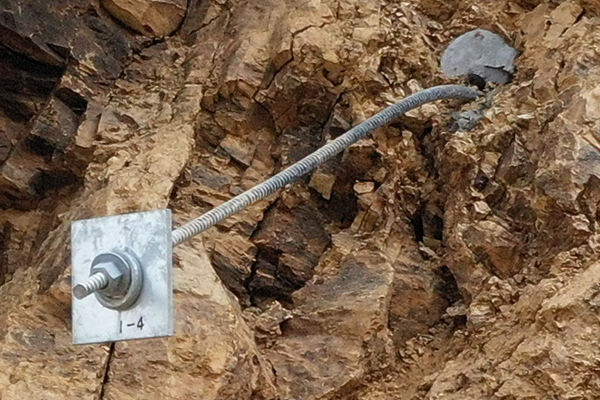
Even though disaster recovery efforts are underway, there are still many sites where structures have partially collapsed or have gaps in them, aren't there?
In situations like that, as a creative touch to the construction plan,
"To prevent secondary collapse, drainage boreholes will be installed around the collapsed area."
Please add that lol
This applies only when rebar insertion or ground anchor work is involved.
However, there are places where drive-in drain pipes can be installed!
The pouring location was about 3 to 5 meters below the center of the collapse, and
I think it's best to hit the ball within 2 to 5 meters to the left or right of the center.
Alternatively, right in the middle is fine, but there's a good chance no water will come out (since it's already been drained).
Let's say there was a slope that had slid as shown below. (Please don't judge my drawing skills!)
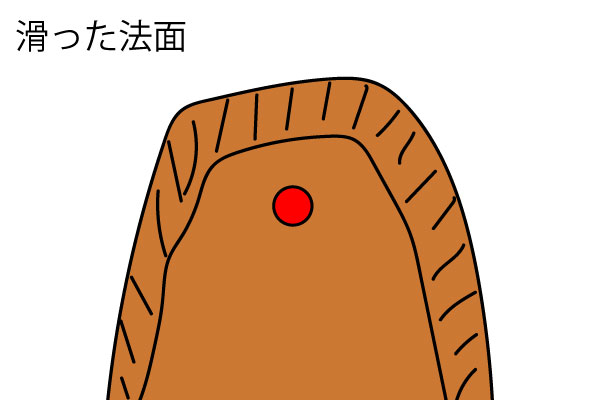
Let's assume the red part is the center.
Let's say we're going to install a formwork frame and insert rebar here.
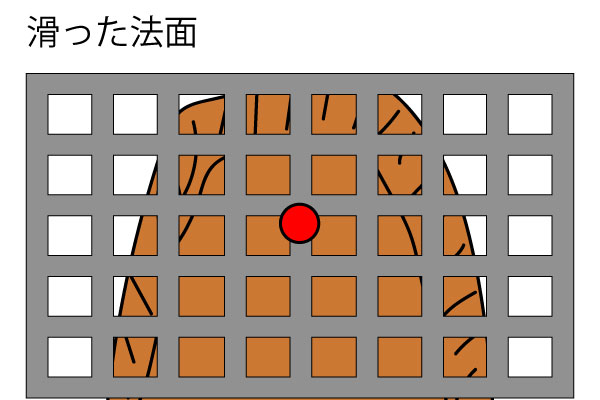
After installing the formwork, pour the concrete at the intersections where the rebar is inserted.
During the construction work, we will install about two drainage outlets.
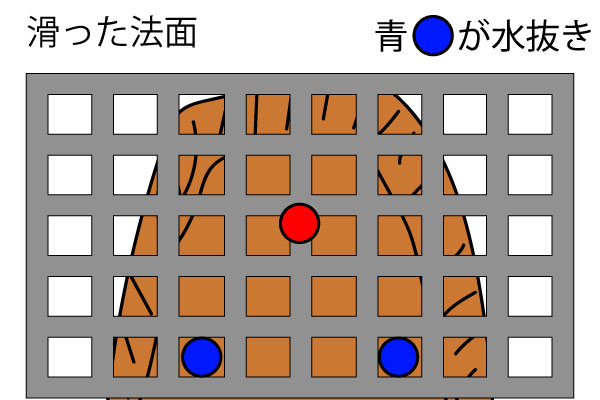
By doing this, you can prevent a secondary collapse before it occurs.
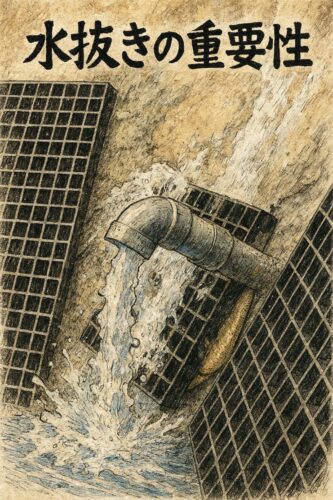
This is because preventing even the slightest increase in internal water pressure can help prevent collapse.
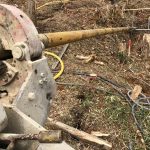
The other day, we installed a drainage borehole at our construction site using some ingenuity.
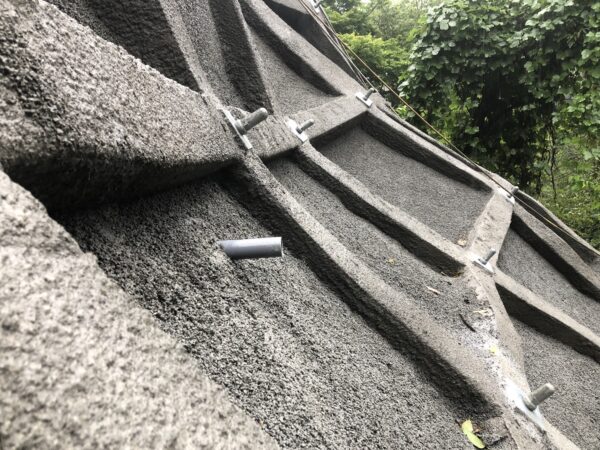
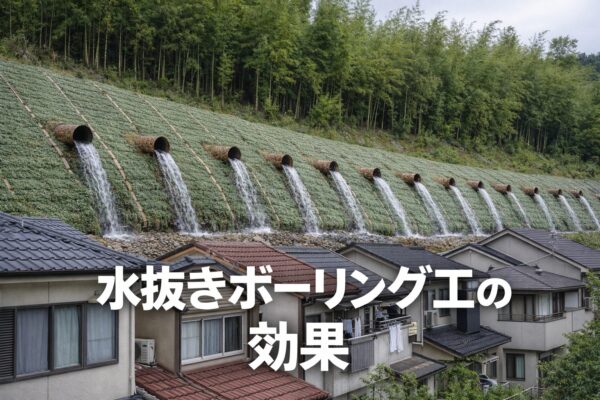
Then, halfway through, water started gushing out.
The drilling depth is 4 meters.
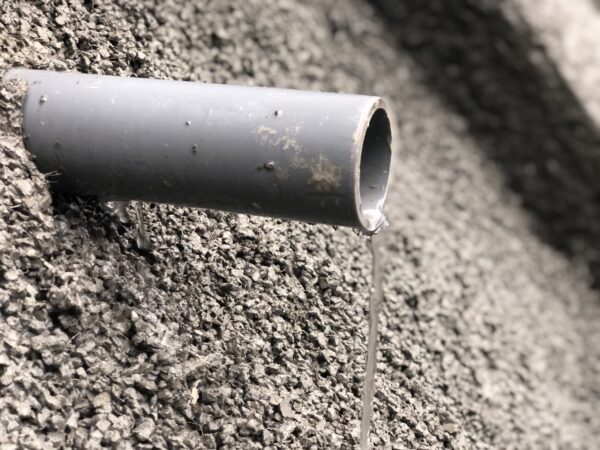
For a depth of about 4 meters, depending on the hardness, you can drill the hole in about 10 minutes, and it’s rarely hard to drill.
It's a mountain that's on the verge of collapsing, and the rock inside is heavily weathered.
Also, there’s no need to force the pour into hard areas, so you can just stop once it starts to harden.
After all, it's just part of our company's efforts.
It depends on the contractor, but if we think something’s going to go wrong, we take action right away.
At the site mentioned above, rebar was inserted into the formwork, followed by the spraying of permeable mortar inside the formwork.
Since it’s difficult to apply the material if water seeps into the frame, we let it drain out from elsewhere first, so that,
This improves workability, helps ensure quality, and prevents collapse at the same time.

The area above the site, where there's a bamboo grove, is pretty dangerous, too.
The presence of a bamboo grove indicates that the soil retains quite a bit of water.
Since it's fluffy and highly absorbent, there's a very high chance it will leak.
Please be especially careful at the bamboo grove site, as the ground is slippery.
From the contractor's perspective, of course there are costs involved, but when you consider the work that comes after that, it's really not that much.
It may seem like a small thing, but drainage drilling is incredibly effective! (Based on my experience)
If I include it in the construction plan from the start and carry out the work properly with a solid rationale, will that earn me some extra points?
That's what I think.
It depends on the director, but I recommend it.
See you later
*Regarding the poured section, since the area above it has already collapsed, there is nothing left to collapse.
It appears there are still thick layers on both sides.
This is the position based on empirical observations.
Please consider this based on the specific situation.
The locations listed above are for reference only.とPlease think about it.
It's not an absolute rule.