Hello, everyone.
This is Enta.
Lately, a director I know very well—let’s call him Mr. K—has been reading my blog every day and pointing things out to me.
Thank you.

I'll be careful not to make a mistake. lol
But that's beside the point.
Isn't it a hassle to connect the ground wire to the generator?
The other day, I was installing a plant at a job site, but there just weren't many places to connect the ground wire.
There's only one ground connection for the generator body and one for the ground fault relay.
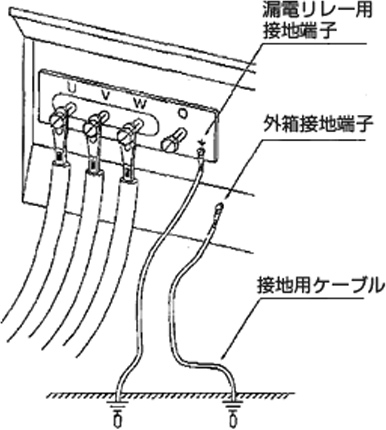
When using the hydraulic unit for the core drill, connect the wiring directly to the generator.
However, since we're also installing distribution panels for other purposes, it's difficult to set up the grounding for those.
I'd like to add more grounding terminals for the ground-fault circuit interrupter.
So, I thought I'd make a grounding rod that could be attached directly to another grounding rod.
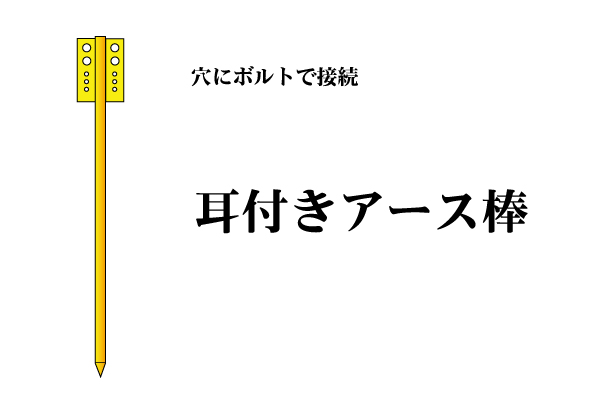
It means there are holes of different sizes in the ears, and you connect the ground wire to them.
However,
"For Class D grounding work (Class 3 grounding work) under the Technical Standards for Electrical Installations, ground the system so that the grounding resistance is 100 Ω or less."
I can't say for sure whether it will meet those requirements, but,
It looks like we can make it work if we increase the main wire gauge to 5.5 mm² or more and use a thicker grounding rod.
I'll let you know if I'm able to conduct the experiment.
See you later.