


Despite having no experience, I was assigned to the field without any training
This is the story of one of my subordinates. She is in her 40s, has a college degree in the humanities, and has no prior experience in civil engineering. She previously worked as a temporary employee, and this year marks her third year with the company.
I think many companies have a training period for those new to the industry, regardless of whether they’re recent graduates or mid-career hires. However, in the case of mid-career hires, depending on their background, some may be expected to contribute immediately and be assigned to the front lines right away with the assumption that they can handle anything.
Even though she had no experience in civil engineering, for some reason she was hired as an immediate contributor and assigned to a job site without any post-hire training. Once she arrived at the site, she didn’t know where to start, and since her supervisor at the time didn’t teach her anything, she says she would ask him every day about the work he was doing, try to figure out for herself what he was doing, and somehow managed to learn the job.
Even in my third year, I still don't understand the basics.
In her third year at the company, she became my subordinate as a result of a personnel reassignment. Since she was an older subordinate, I wasn’t sure how to handle the situation at first, but I figured that since she was in her third year, she must be capable of handling certain tasks, so I decided to delegate more and more work to her.
Then, they started asking questions like this.
- I don't know how to read drawings
- I don't know how to use CAD
- I don't know how to prepare the documents
They kept asking me the same thing over and over again, and there were times when I felt like getting angry. Since there were similar documents in our archives, I wondered, “Why don’t they look at them? Why don’t they check?”
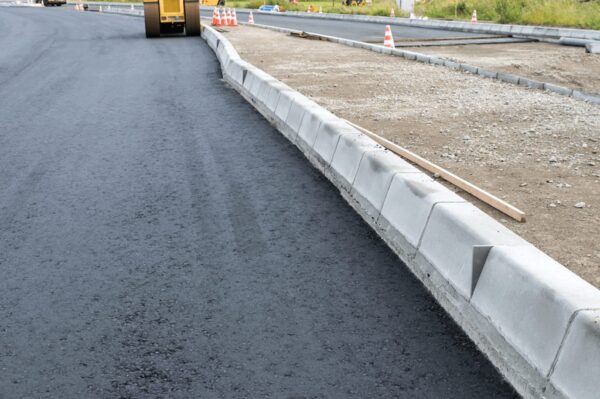
Take the composition of the pavement, for example. Let’s say there are sections where the surface layer is 5 cm thick and others where it’s 4 cm thick. When I asked her to explain, she just said, “It’s written in the application form.” When I asked, “What about the rest?” she fell silent.
It seems they simply assumed the drawings in the application were correct, without giving any thought to the intent behind the drawings, the design process, or why they were drawn that way.
Paving specifications and design manuals state that the roadway should be 5 cm thick and the sidewalk 4 cm thick. I want her to understand these details, so I’ve taken her to a construction site where a permit has been filed, explained the composition of the pavement, and told her to take notes in her notebook as a personal study guide.
Similarly, regarding the consideration of suspended scaffolding for seismic retrofitting work on bridges, when I asked why a 2-meter clearance between the water level—calculated based on water levels from the past 5 and 10 years—and the bottom of the scaffolding was required, her response was, “Because it’s in the application.”
However, when I explained that I was basing my analysis on the Ordinance on Structural Standards for River Management Facilities and other sources, as well as commentaries on the River Act, she seemed to understand, and from that point on, she began reading various sets of specifications.
To her, who often says, “I don’t know how to read blueprints,” I tell her, “Go to the job site and compare the blueprints with what you see there.” If she still doesn’t understand, I take her to the job site with me and explain it to her until she gets it.
I explain that the drawings are just like the instructions for a model kit, and since construction is based on these drawings, comparing the progress on-site with the drawings is the best way to understand the project if you have the time.
Don't work overtime; take the time to train your subordinates.
At my company, new employees are sent out to the field without any prior training, so training them takes a lot of time, and I feel like this is adding to the workload of my already busy supervisors.
In fact, while I’m responsible for training and mentoring my subordinates, I’m also trying to do my own work. But since I can barely get my own work done, I end up having to work overtime because I have to get this much done by today or I won’t make the deadline… That’s the reality of the situation. With strict overtime regulations in place, I, too, end up working unpaid overtime.
Even if we’re told not to work overtime and to take the time to train our subordinates, I think that’s a contradiction. It would be fine if there were plenty of staff at the workplace, but with headcounts being cut to reduce costs and us working with the bare minimum number of people, isn’t it impossible to train new hires?
I believe this is an issue affecting the entire construction industry. I look forward to hearing your opinions and thoughts.