Hello, everyone.
This is Enta.
We've been having a string of hot, muggy days.
This is the time of year when people's safety awareness tends to wane.
The other day, I went to school to help him!
If you see someone collapsed or unconscious at the scene, please do whatever you can to help.
CPR Procedure
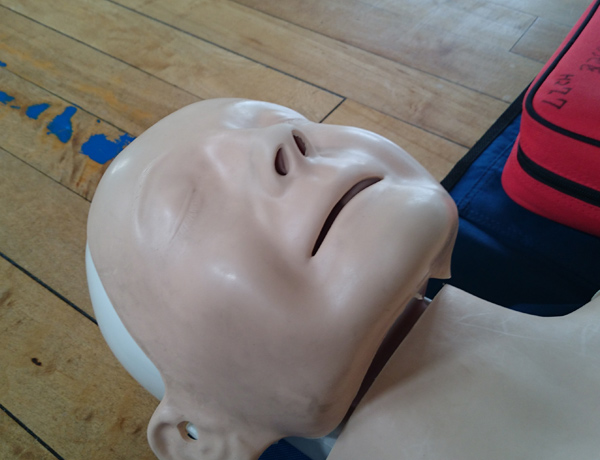
I’ve been studying everything from calling for help to chest compressions, rescue breathing, and AED use.
1. Talk to them while gently tapping both their shoulders
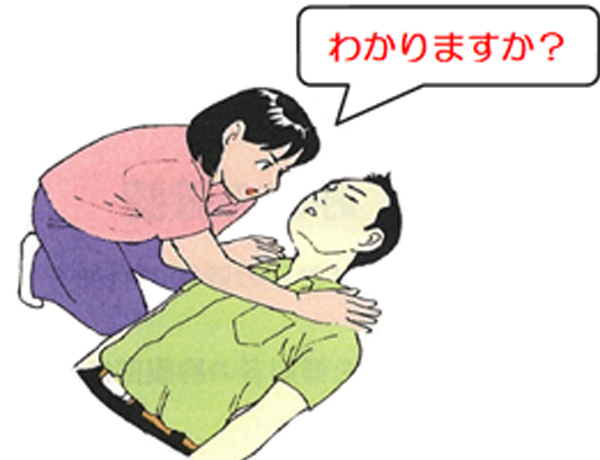
2. If there is no response, or if you are unsure what to do, shout loudlyCall for help, dial 119, and request that an AED be brought to the scene
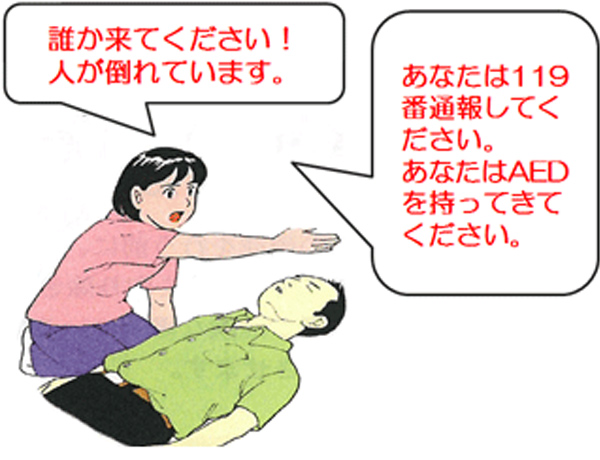
While we're at it,Please invite as many people as possible.
The reason is that performing CPR requires a great deal of physical strength.
If you take turns, the burden will be lighter.
Also, for example, in the case of a woman, if there is a situation where she needs to undress, we can surround her with people to protect her privacy.
3. Check for breathing
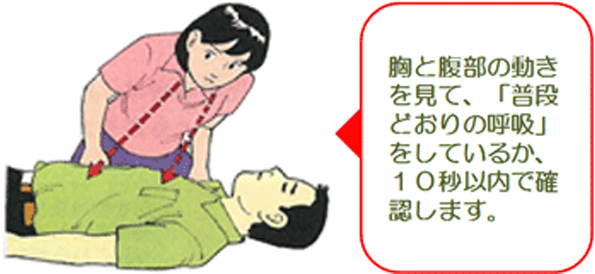
4. If you are not breathing normally, or if you are unsure what to doImmediately perform 30 chest compressions.
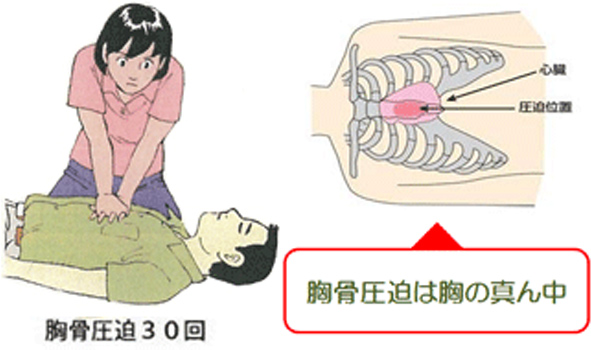
It's right between the nipples.
The heart is actually right in the middle!
5. If you have the necessary training, skills, and determination,After chest compressions, perform two rescue breaths.
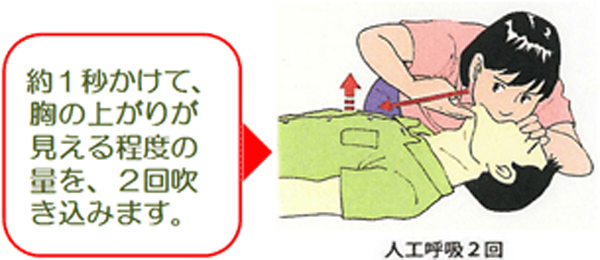
Tilt the chin up slightly to keep the airway open, and check to see if the chest is rising.
There are cases where artificial respiration is not necessary.
- If you have not been trained in CPR
- If you do not have a mouthpiece for artificial respiration, etc.
- When there is a risk of infection from blood, vomit, etc.
- I can't do it for others.
- I don't have the courage (which isn't a bad thing)
*Although it is said that the risk of infection is extremely low even without using a mouthpiece for artificial respiration,
From the perspective of infection prevention, it is safer to use a mouthpiece for artificial respiration or similar devices.
6.When the AED arrives

7. Attach the electrode pads to your chest
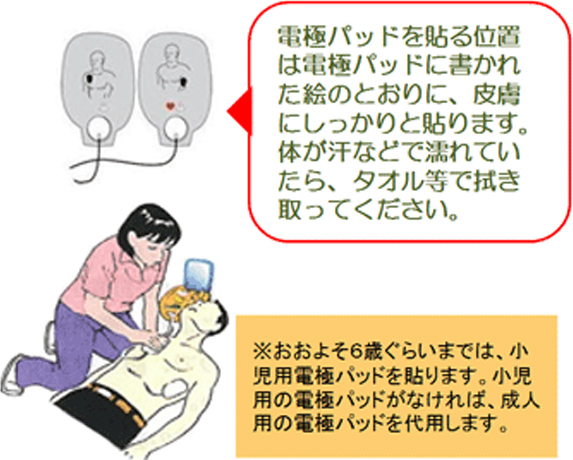
For children, we offer pediatric pads.
Also, if there is something preventing you from attaching the pads, please attach them so that they are positioned on either side of the heart.
If you are wearing any jewelry, it is best to remove it.
8. The AED determines whether an electric shock is necessary.
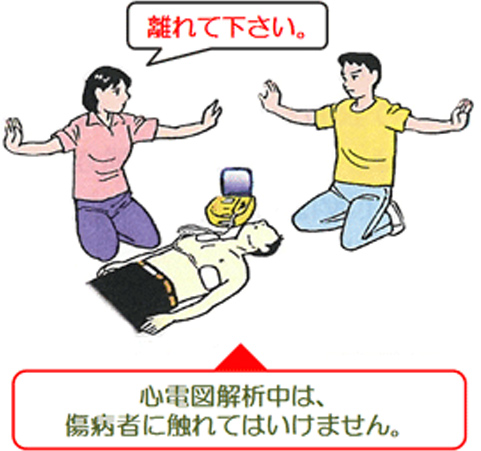
Modern AEDs are quite advanced, so they’ll walk you through the entire process.
Sooner or later, AI (artificial intelligence) will likely be incorporated into AEDs as well.
If that happens, it might mean we’ll have to start by setting up the AED before performing CPR.
9. Press the shock button
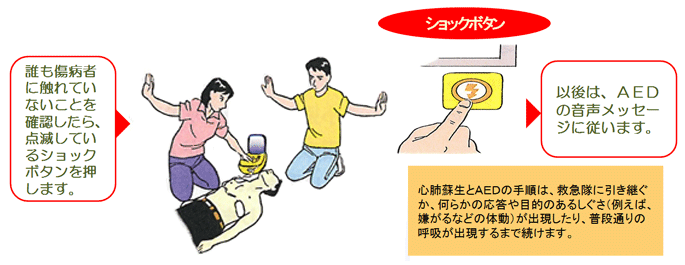
If there are people available, please perform CPR while immediately attaching an AED.
It's all happening at the same time. I hope an ambulance arrives while we keep doing this.
By the way, this method is intended for adults.
It's a little different with kids.
It’s certainly difficult for a layperson, but in the event of an emergency, the most important thing is to first...
First, calm down.
This is the most important thing!
Then, take a moment to look around and make sure the area is safe.
Then, let's call 119—or have someone call it for us.
In an emergency, the most important thing is to stay calm. That’s where it all begins.
Everyone, stay safe!
By the way, this illustration and others like it are straight rip-offs of the Tokyo Fire Department’s designs, lol.
It's pretty much a direct rip-off, but I figured it might be okay to include it in the civil engineering section, lol.
Here's the real thing↓↓↓
(Tokyo Fire Department: If You See Someone Collapsed—CPR Procedures)
See you later.