Hello, everyone.
This is Enta.
It seems there has been a spate of layoffs and company bankruptcies in the wake of the COVID-19 recession.
I’ve heard that the number of unemployed people has exceeded 70,000, so if they were to switch careers to the construction industry, it would help revitalize the sector, even if only a little.
And if those who are unemployed can find jobs, it’s a win-win for everyone, isn’t it?
So, as someone who has switched careers from another industry, I’d like to list some of the key points and common questions about the construction industry.
I hope this will be of some help to those looking to change jobs.

Questions About the Construction Industry, etc.
1. People who struggle with social interactions
Even people who can’t or don’t want to communicate can still get some work done as part of their daily routine.
However, you cannot become a supervisor. In some cases, your duties may be limited to hands-on work or light tasks.
However, once your skills have improved to a certain level, you'll be able to perform operations and the like.
By the way, a lot of surgeons are quiet and grumpy lol (and the older ones tend to be a pain lol).
2. People who aren't in good physical shape
For those of you whose work is mainly office-based and who have never worked outside the office!
First, try your best for a week.
Every job is tough at first.
You'll get used to it after three weeks. After three months, your stamina will return to what it used to be.
Of course, depending on the specific field of civil engineering, you might end up getting really muscular—or, on the flip side, putting on weight, lol.
3. Those who are new to the civil engineering industry and don't know where to start
The civil engineering industry is actually right under our noses.
The roads you walk on, the highways you look out at, clusters of utility poles, guardrails, the foundations of houses, the foundations of buildings, landslide prevention measures, and disaster preparedness measures.
Step outside, and what you see is the work of the civil engineering industry.
4. What is the difference between the construction industry, civil engineering, and architecture?
As civil engineers, we generally view civil engineering as the foundation beneath a building, while architectural engineering is the structure above it.
It is divided into categories such as paving, foundations, slope stabilization, earthworks, tunnels, dams, and blasting, and is collectively referred to as the civil engineering industry.
It is divided into categories such as interior finishing, painting, carpentry, plastering, electrical work, landscaping, and steel framing, and I believe these are collectively referred to as the construction industry.
In reality, the industry is divided into much more specialized fields, and there are many aspects that aren’t entirely clear, but collectively, it is referred to as the construction industry.
This means that almost everything you come into contact with was created by the construction industry.
5. Aren't there going to be some scary people there?
To put it bluntly, the further down the supply chain you go, the more of them there are.
Even now, there’s no denying that it serves as a place of refuge for people who have committed such crimes and ended up in prison.
And there are still quite a few front companies run by organized crime groups. (There are plenty of rumors.)
However, if you do end up in a situation like that, I think the problem can usually be resolved by consulting the police or the Labor Standards Office.
If you're looking to change jobs, try to find a company that's as solid as possible. (Though that's a tough call.)
Please be sure to gather all the relevant information, such as whether the place is well-known locally or if you have relatives there.
6. Isn't it black?
It used to be "black," but now it's pretty much "white."
A two-day weekend has become the norm.
Salaries are on the high side. (Salaries at general contractors have been particularly high lately.)
Starting at 10,000 yen, even at the absolute minimum level (where you can't do the job at all)—
If you work 25 days, 250,000 – (social insurance, etc.) = take-home pay of around 200,000
This is the minimum requirement right now. (Aichi Prefecture)
You'll also be paid properly for overtime.
We'll also be giving out bonuses.
Commute times may be on the longer side (around 1.5 hours one way).

7. It's not easy to become a director, is it?
I think you need at least about five years of experience to become a director. (Until you reach a certain level.)
Since obtaining certain certifications may be required, a broad understanding and knowledge of construction are necessary.
In my experience, there’s a clear difference in the quality of a supervisor’s paperwork depending on whether they have experience as a general contractor supervisor or not.
Furthermore, with the shortage of directors in the industry growing more acute, it seems likely that talented individuals will be able to earn a substantial salary five years from now.
On the other hand, the burden is also significant.
8. Craftsmanship is hard, isn't it?
Try playing a challenging game for 8 hours every day.
You're starting to get the hang of it, right? (For those who aren't very good at games... hang in there! lol)
It's the same thing.
Craftsmanship is a process of repeatedly applying experience and know-how.
If you do this for three years, you'll be able to handle just about anything. (In the slope stabilization and anchor installation industries)
That said, while it can be a little confusing at times when new types of work come up, you can generally master it in about three years. (Our Vietnamese employees have already reached a certain level of proficiency after just two years.)
From that point on, it will be a matter of honing your skills to a razor's edge.
9. It'll get dirty, won't it?
People who do dirty work are proof that they're bad at their jobs.
Instead of a suit, I wear a "yakke"—a nylon work shirt that you put on over your work clothes. lol
That's why it hardly ever gets dirty.
It's the kind of dirt that usually comes off with a quick wash, so you'll be clean and refreshed after taking a bath.
10. It smells bad, doesn't it?
Both men and women smell bad when they sweat.
So, after work, I change clothes and get in my car to go home.
That way, the car won't get dirty, and it won't smell that bad.
There are quite a few construction workers who pay close attention to their appearance.
There are quite a few craftsmen who are neat and tidy, and there are also quite a few messy supervisors, lol.
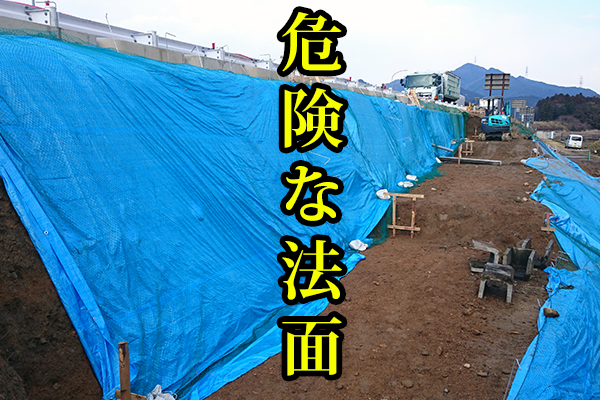
11. Isn't that dangerous?
Danger!
That is precisely why I am always mindful of this and strive to prevent accidents.
No one wants to get hurt, and no one wants to cause harm to others.
In particularly dangerous work sites, there are few accidents, and a strange sense of complacency—thinking, “Wait, an accident here?”—is what leads to accidents.
12. Are there more women now?
There really are a lot of women joining this industry.
The site representative for our general contractor is a woman, and the person in charge at the government office is also a woman.
There really are a lot of them, aren't there?
This is true not only in the civil engineering industry but also in the construction industry.
There are certainly more people working as site supervisors or skilled tradespeople—who earn more—than there are office workers who don’t make much money.
I think it's a workplace where women can hold their own on an equal footing with men.
What's more, with the recent advances in mechanization, manual labor has decreased significantly.
It is expected that the advancement of women will accelerate even further in the future.
Is that roughly the idea?
There are both good and bad points.
That's true no matter what industry you work in.
The construction industry mainly involves outdoor work.
Even on days when I'm feeling down, I work up a sweat under the blue sky.
Even on days when I'm feeling good, if it's raining and I have to work in a raincoat, I end up working with the inside of the raincoat soaked with sweat.
Working up a good sweat often leaves me feeling refreshed.
It can also significantly alleviate feelings of gloom.
Work while staying active, eat, and sleep!
This is the absolute best.
And it’s the kind of job you often hear about that’s featured on maps,
Lately,A Job That Appears on Google Street ViewThat's it.
Especially in civil engineering.
There are actually a lot of companies (in various industries) that turn out to be fun once you join them.
There are pros and cons, but please consider it carefully before entering the construction industry.
Before you know it, you may find that you’ve acquired the skills to handle just about anything.
It is your environment and your true self that shape who you are.
See you later.