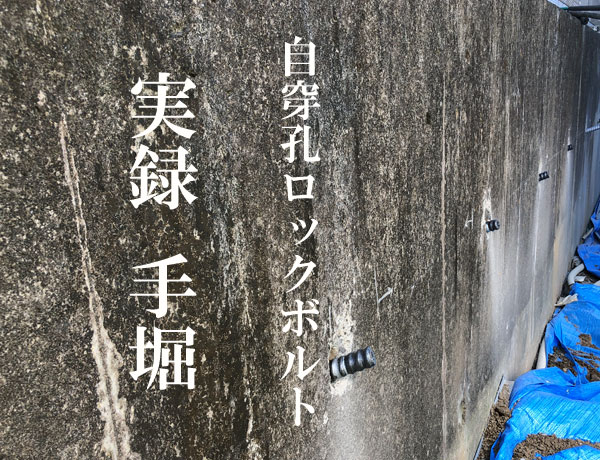


Hello, everyone.
This is Enta.
When you're working on a job site, landslides happen all the time, don't they?
At times like that, don't you find yourself thinking, "Man, being a rebar installer really comes in handy"? lol
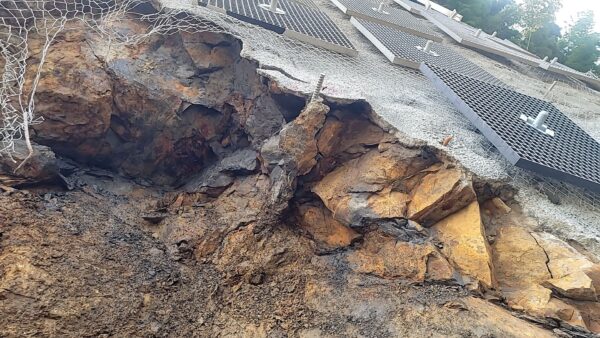
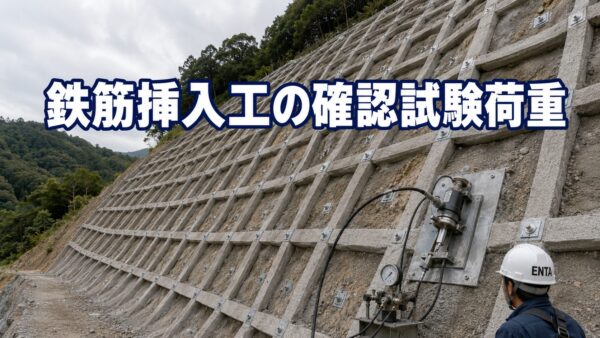
As is the case at this site, the rebar, cement slurry, and natural ground are all firmly bonded together!
This is the site where a structure that had been held in place by that friction collapsed due to the unusually heavy rain.
A massive amount of water gushed out from one section, causing it to collapse.
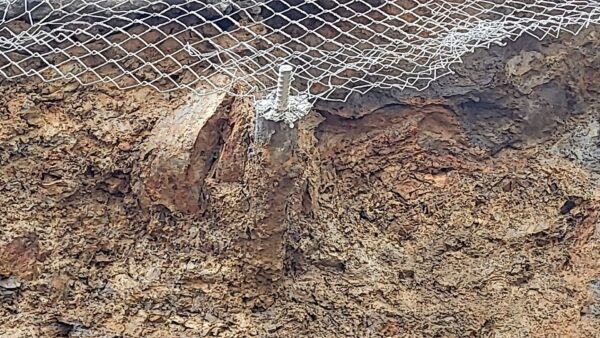
The surrounding concrete has already softened, and the rebar looks like Pocky, lol.
Well, when it comes to this, the ones that are going to fall will just fall, I guess.
The problem comes after this.
This spot has definitely become a water-logged area, and water is bound to seep out of it in the future.
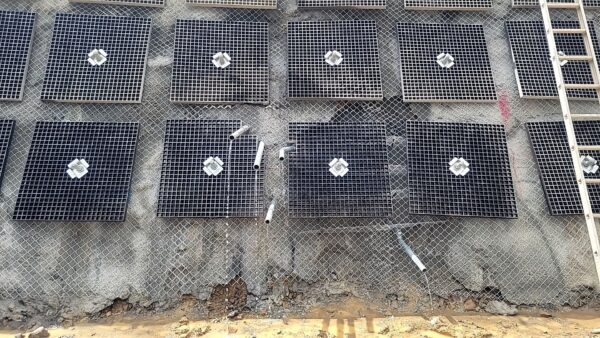
Therefore, we voluntarily drilled drainage boreholes.
Since this water never stopped flowing, I eventually connected it with a clean pipe so that it would flow all the way down.
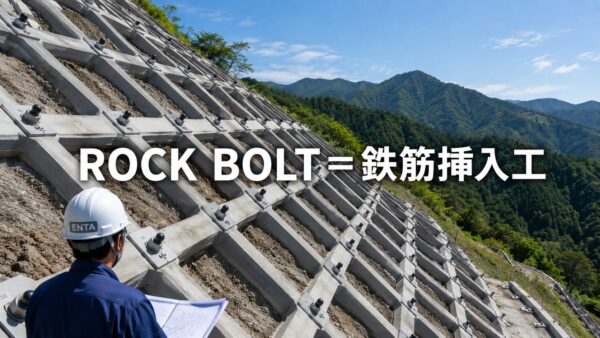
The only thing that occurred to me is that, when it comes to rebar installation, a staggered arrangement is ideal, especially when considering the prevention of gaps.
This wall also seems to have developed a gap between the rebar and the concrete.
Reinforcement insertion and dewatering drilling methods have become increasingly common recently.
It is designed to handle a certain degree of slippage when used in combination with other components.
I think this is a positive trend, since there are many job sites where people say, “If we just have a drainage boring machine, it shouldn’t slip, right?”
It's the rainy season, so we'll need to make sure we're well-prepared for the rain!
See you later.