Hello, everyone.
This is Enta.

The other day, I was contacted by a general contractor, who discussed my next job with me.
I'm really grateful.
I truly hope that, little by little, I can be of help to all of you in this way.
We'll do our best—for the prime contractor's profit (and our own, too)!!
But that's beside the point.
Does everyone know this symbol?
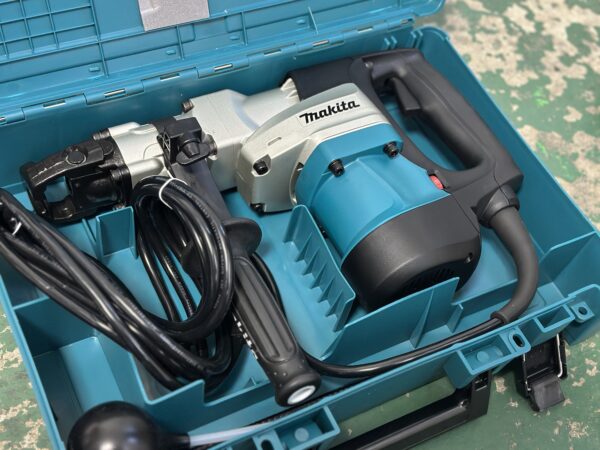
This is the Makita hammer drill I recently bought.
This is what's written on the specification label for this hammer drill.

This is the symbol.
Did you know?
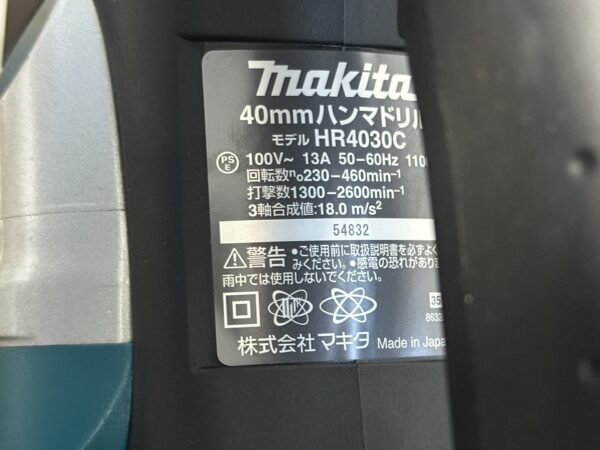
This symbol.
Actually, I just found out about this myself recently, but,
This is the symbol for a double-insulation structure.
Power tools without this mark have only basic insulation and come with alligator clips or 3-pin plugs, right?
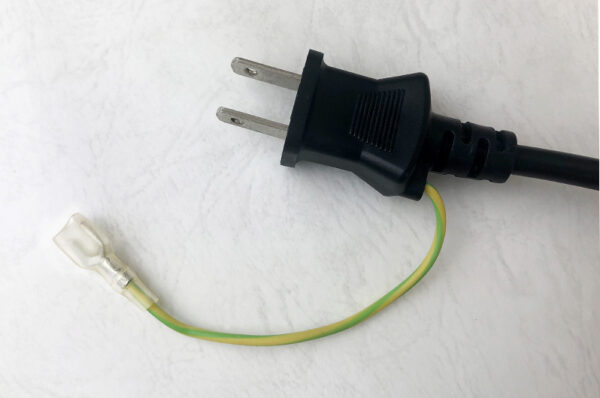
In such cases, you must always install a ground.
However, electric appliances with a double-insulation design don't need to be grounded!!!!
Double insulation is,A product that adds "auxiliary insulation"—which provides protection in the event of a failure in the standard "basic insulation"—to the standard "basic insulation."It seems to be a general term for the structure of [...].
|
Double Insulation
(Nijūzetsuen)
Double insulation refers to a system in which “basic insulation”—which provides basic protection against electric shock—is supplemented by “supplementary insulation,” which provides protection in the event that the basic insulation fails. Even if the primary insulation fails for any reason, the system is designed so that dangerous voltages do not reach the surface thanks to the secondary insulation, thereby ensuring a high level of safety. Products with a double-insulation design can be identified by the "double square" symbol. Keep in mind that for electrical equipment with a rated voltage of 150 V or higher—which is required to be “designed so that it can be grounded”—there is no need to ground the equipment if it has a double-insulation structure. Many electrical devices used in environments prone to contamination from water, dust, and other substances—such as power tools used at construction sites—feature a double-insulation design to enhance safety. Conversely, when using electrical equipment that does not have a double-insulation structure, connecting a ground wire is required by law. https://koujishi.com/glossary/
Electrician.com
|
Even if a safety inspection points out that grounding is required, since we use double-insulated power tools, grounding is not necessary!
I could tell you, but depending on how I put it, it might get complicated, so let's just ask nicely lol
It's this symbol!
Please be sure to remember this.
This type doesn't need a ground connection!!
That said, if a major company’s internal rules say grounding is absolutely required, then I guess it really is, lol.
I can just hear someone saying, “Even if that’s true, we still need a ground wire,” lol.
Well, if you want to be extra safe, grounding is a good idea, but it’s more important to install a ground-fault circuit interrupter.
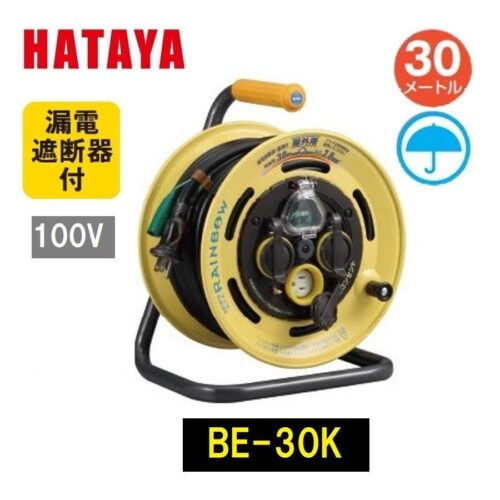
For example, rather than running a single extension cord from a generator to connect to a power tool,
Place the cord reel with the ground-fault circuit interrupter shown above in between.
That way, if anything happens, the power will be cut off there.
The generator side will probably go down too, but we need to set up a system that ensures it goes down even during that process.
That way, it’s definitely safe, and using power tools with a double-insulation design provides almost complete protection against electric shock, right?
Please keep that in mind ^^
We civil engineers aren't very familiar with electrical systems and mechanisms, so I want you to make sure you learn this thoroughly.
See you later.
If you're going to buy one, I recommend the 30-meter version.
As a general rule, the cord reel should be fully extended when in use.
50 meters is a bit of a slog, so 30 meters is probably more reasonable, lol.
And the thicker ones are better, you know ^^
Of course, if it rains, you should stop all work involving power tools immediately!