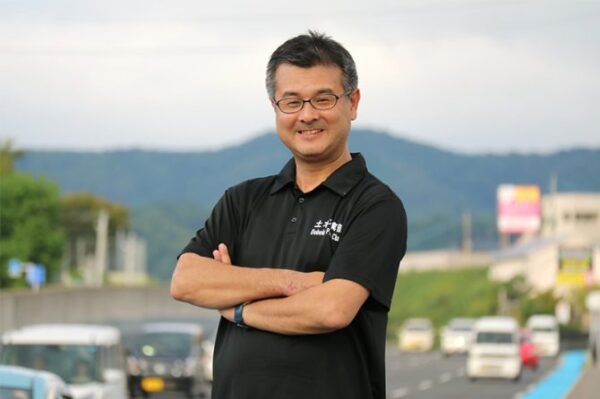
“The ”Civil Engineering Evangelist” Speaks Out on Work-Style Reform
In April 2019, the so-called ”Work Style Reform-Related Laws” went into effect.
The main points are “caps on overtime work (45 hours per month and 360 hours per year, in principle),” “the requirement to take annual paid leave (5 days per year),” and “the prohibition of unreasonable differences in treatment between regular and non-regular workers.” For now, these regulations apply to large companies, but as of April 2024, they will apply to all occupations, including the regional construction industry.
While one could simply say, “That’s just the way things are these days,” there are quite a few local construction business owners who are worried about whether their operations will run smoothly.
Some civil engineers are sounding the alarm, asking, “Won’t this prevent us from developing fully qualified engineers?” A representative from Kyodo Technical Consultants, Inc.Shogo Matsunaga.
How will the Work Style Reform affect the training of civil engineers? We spoke with them to learn more about this, as well as the goals of the much-talked-about civil engineering support team, “Demi and Matsu.”
"Slowing Growth Among Engineers" and "Declining Quality of Finished Products" in the Wake of Work-Style Reform
――Mr. Matsunaga, what are your thoughts on the work-style reform and the enforcement of the related laws?
Mr. Matsunaga I mostly agree, but I'm also concerned.
――What is worry?
Mr. Matsunaga In the civil engineering industry, for the past 20 years or so—or perhaps even longer?—major companies have taken the lead in promoting work-style reforms as part of their own initiatives. Specifically, I believe the focus has been on reducing total working hours through measures such as improving work efficiency, encouraging employees to take time off, simplifying internal procedures, and moving toward digitalization.
Amid these efforts, although in a different industry, the case of Matsuri Takahashi’s death from overwork occurred four years ago. It was a shocking and heartbreaking incident. While it may be classified as a labor issue, it was an incident that completely denied her human rights and dignity.
The now-famous “Dentsu Ten Rules of the Demon” are good advice in their own way, but I thought, “If you actually tried to enforce them in this day and age, you’d be a real demon.”
Against this backdrop, the Work Style Reform-Related Laws went into effect on April 1 of this year, and, for example, upper limits on overtime hours were “codified into law.” I think it is a very positive development that, thanks to the implementation of these laws, efforts to reduce long working hours—including on the part of clients—are gaining momentum.
However, I have reservations about the approach of imposing a blanket legal limit on overtime hours. I can’t help but worry that this might lead to cutting back on professional development or simplifying quality checks. Furthermore, I’m concerned that this could ultimately result in a slowdown in engineers’ professional growth and a decline in the quality of the finished products.
――You're saying it shouldn't be regulated by law?
Mr. Matsunaga From the perspective of worker protection, I believe enforcement is necessary. However, in the world of engineers and craftsmen, a style of talent development has long been practiced in which people gain a wide range of experiences and acquire skills while they are young, and then continue to refine those skills over time. You could call this a tradition. I’m not saying we should “maintain Japan’s traditional apprenticeship system,” but the passing down of technical skills is essential.
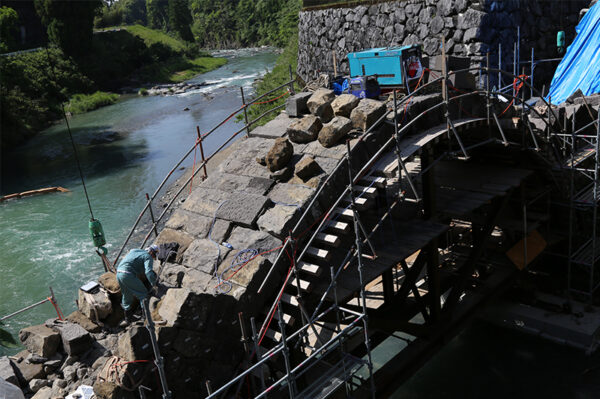
The key point here is that, while there is some variation, human memory typically peaks between the ages of 15 and 25 at most. When you’re young, not only is your mental memory sharp, but your motor memory—the memory of your hands and body—is also strong. To become fully competent, you need to train your hands and brain to learn as much as possible while you’re young.
That is precisely why we should “let them experience many hardships and failures while they are young.” I believe this is the kind of upbringing that is in tune with the growth of human beings, who are creatures that age.
”A Reform of How We Live” Rather Than a "Reform of How We Work"
――If you don’t have a fulfilling personal life when you’re young, marriage and having children tend to get put off, don’t they? After all, we’re in an era where both partners take parental leave.
Mr. Matsunaga Of course, I don’t oppose shorter working hours as a way to enjoy one’s personal life more. However, I feel uncomfortable with the idea of imposing uniform legal regulations on people, given that everyone has different lifestyles and values.
For engineers, if you don’t work hard while you’re young, you’ll be slow to become fully competent, you’ll be slow to earn your certifications, your income won’t increase, and you’ll end up struggling in the future due to a lack of technical skills—wouldn’t that make for a much less fulfilling life?
In the civil engineering industry, even as the adoption of technology leads to increased use of IT and robotics, it’s hard to imagine that the technical skills required will decrease. That’s precisely why I hope you’ll work hard while your memory is still sharp, so that you can lead a fulfilling career as an engineer until retirement.
Rather than pursuing work-style reforms from a short-term perspective, I hope people will take a broader view of their lives to design their own way of living—and adopt a mindset focused on transforming their way of life.
――Does reducing overtime lead to a decline in technical skills?
Mr. Matsunaga I can't say for certain that productivity is declining, but in this industry, it's not uncommon for work to require careful attention over an extended period of time.
Just because we’re implementing work-style reforms doesn’t mean we should impose a rule like, “Everyone, let’s go home at 5:00 p.m. today.” Doing so could actually dampen the motivation behind thoughts like, “I’m going to give it my all and finish this task today!” or “I’m going to work hard this month until I’ve mastered this task!” After all, we’re emotional beings.
I think this cumulative effect will slow down the improvement of technical skills. It’s possible that the average age of those passing skill and certification exams may also rise year by year.
There’s a term called “work-life balance,” but “work” and “life” are not in opposition to one another. I believe that work and life should be in a relationship where they resonate with and enhance each other.
Promoting work-style reform may not necessarily enrich people’s lives or their careers as engineers. I believe that, for engineers and skilled craftsmen, rather than imposing legal restrictions, it is best for each individual to make decisions in consultation with their company as part of their own life planning and lifestyle reform.
――What does it mean to enrich an engineer’s career?
Mr. Matsunaga Under working hour regulations, if an engineer’s growth is stunted until well past the age of 30, they will be delayed in assuming a leadership role to mentor subordinates and may not even have the chance to gain that experience—potentially leading to an era dominated entirely by junior engineers. There is also concern that, before they become fully competent, they may enter an age where their memory significantly declines, effectively ending their career as an engineer. The growing number of older engineers who can no longer work with their hands, draw blueprints, or mentor their subordinates—I imagine this is a difficult situation for the engineers themselves, their subordinates, and their supervisors alike.
Conversely, if you become fully competent sooner, you’ll be able to make more decisions on your own, and from that point on, you’ll gain the freedom to enrich your personal life and more. The longer you can work while taking pride in your ability to contribute to society, the more fulfilling your career as an engineer will be, wouldn’t you agree? I also believe this has a significant impact on your compensation.
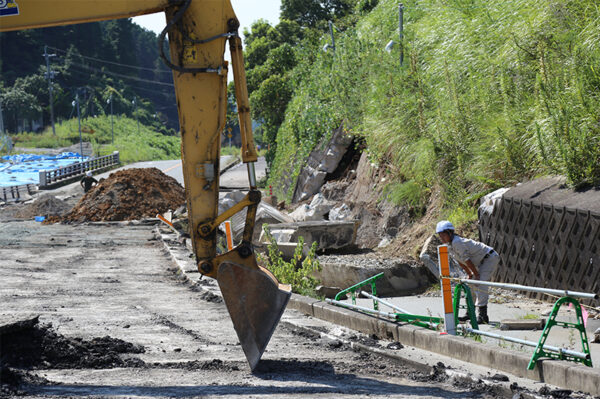
――Is work-style reform unnecessary for the civil engineering industry?
Mr. Matsunaga I don’t think it’s unnecessary. It’s necessary. However, I do think the timing is off. If the skill level of individual technicians declines, Japan’s overall technical standard will decline as well. We’ll end up without any skilled craftsmen.
Trades such as carpentry and plastering are “hands-on” professions where, after graduating from middle school, you become an apprentice and learn the skills through physical labor while you’re still young. It would be virtually impossible to do this once you’re over 20.
But how many young people these days finish middle school and become apprentices to master craftsmen? Furthermore, due to work-style reforms, the skill level of technicians is declining, and there will be no more skilled craftsmen. If this continues, the civil engineering industry will eventually become one without professionals.
The Work-Style Reform initiative was launched at the worst possible time. What the civil engineering industry really needs is a “Lifestyle Reform,” not a “Work-Style Reform.” I’m currently considering whether I can launch an initiative to promote this idea starting next year.
The labor shortage is not due to “the construction industry’s poor image”
――By the way, Demi and Matsu have been active for over three years now, haven't they?
Mr. Matsunaga DemiMatsu’s activities didn’t start with the idea of, “Civil engineering has a bad image, so let’s change that.” Young people today simply don’t have any image of the civil engineering or construction industries at all. It’s neither good nor bad—they’re just not interested. DemiMatsu’s activities began with the goal of “helping people learn about civil engineering.”
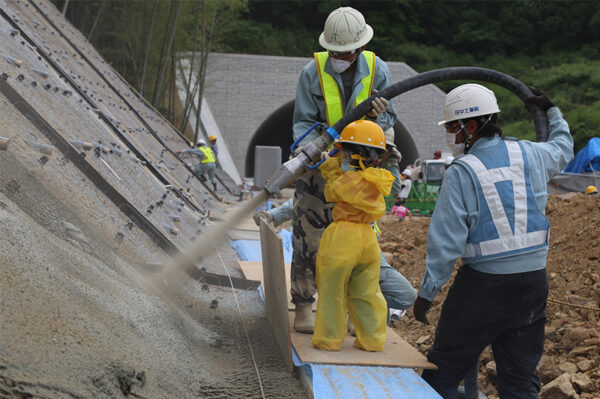
YouTubers are extremely popular among children these days. The reason for their popularity is that anyone can watch them online. As for girls, the reason why being a baker or a florist is still a popular career choice is that these are professions they see every day.
However, since infrastructure has been developed to a certain extent recently and civil engineering projects have become less frequent, we have far fewer opportunities to see civil engineering work in our daily lives. Unless a disaster strikes, we probably won’t have a chance to appreciate the value of civil engineering through TV or newspapers.
That said, I think many people who actually see civil engineering projects in person would say, “That’s amazing” or “That’s cool.” The type of civil engineering work people see most often is road construction, right? That’s why the public’s image of civil engineering is closely tied to road construction. If road construction projects can effectively convey their value and purpose in various locations, I think the public’s perception of civil engineering will improve significantly.
――I often hear people say, “Young people aren’t interested in joining the construction industry because civil engineering has a bad reputation.” Do you have any advice?
Mr. Matsunaga I do hear people say that even when they post job openings, no one applies. With the number of children declining, that’s probably having a big impact.
But is “a poor image” really the reason people aren’t drawn to the construction industry? It might just be an excuse used by some construction companies that aren’t seriously trying to recruit talent.
I also work with small and medium-sized construction companies, and the ones that are really committed do attract good people.
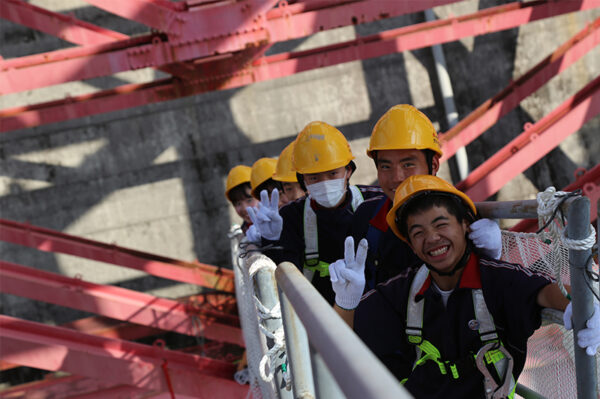
――Are you saying that the lack of visitors is due to the construction company’s lack of effort?
Mr. Matsunaga Of course, the declining birthrate, aging population, and depopulation have a significant impact. However, I feel that it’s often the very companies that complain, “Young people just aren’t coming here,” that are lacking in PR or are simply bad at it. They aren’t as effective at promoting themselves as other companies are.
Although there are regional differences, I think that if you attend industry meetings and conduct thorough sales efforts with clients, you can secure a fair amount of work, even if the projects are small. That’s why I believe the civil engineering and construction industry was one where you didn’t need to actively promote yourself.
However, from now on, since a limited number of students will be choosing one job from among many, they will naturally seek employment in industries and companies that appeal to them.
I’ve also heard that the number of students who want to stay in or return to their hometowns has been increasing recently, so this is a positive trend. That’s why we need to make efforts beyond just sales activities, and I think we’re falling far short in that regard.
The CEO, who laments that “no one is coming,” has an awkward smile.
――The labor shortage is a matter of life and death. Specifically, what should we do?
Mr. Matsunaga Setting aside issues like a negative image or blaming politics and the media, we should first do what we can ourselves.
For example, visiting local schools to build strong relationships with teachers, or making visible contributions to the community. I don’t think sponsoring village festivals or fireworks displays will really leave a lasting impression on young people.
It is also important to be able to explain—clearly, understandably, and with pride—to students, their parents, and teachers why our company is essential to the community and what kind of work we do to ensure the community’s safety and peace of mind, as well as our company’s mission and values. We would like you to share this message at schools and community events.
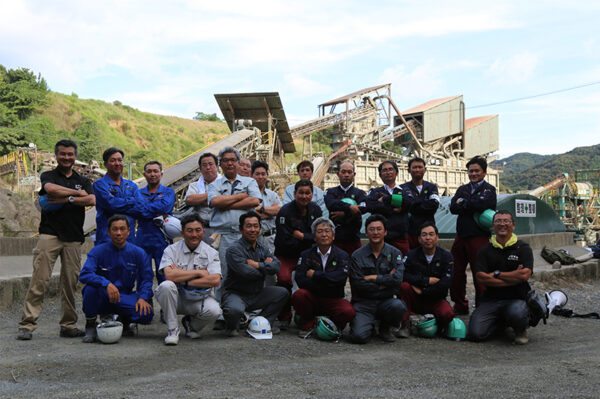
I think it would be effective to hold a civil engineering hands-on event for children at a local construction site, even if it’s just once a year. I recommend setting up a dummy tree and a pine tree inside the company (laughs).
Demi and Matsu support that. The president of the construction company, who laments the lack of visitors, only exchanges information with politicians, government officials, and industry newspapers, so even his smile seems forced.
I hope you’ll make it even more appealing for students to think, “I want to join that company” or “I want to work under that CEO.” I’m sure the wonderful smiles of the CEO and employees will really appeal to the students.