Hello, everyone.
This is Enta.
Recently, when I went to a general contractor’s job site, I was told that people aged 65 or older aren’t allowed to work on slopes, which caused me a lot of trouble.

They say that one in five workers in the construction industry today is an older adult (age 65 or older)—but honestly, isn’t that terrible??
Even though we have the Act on Stabilization of Employment of Older Workers, older people are still losing job opportunities, aren't they?
Is this really a vicious cycle, where young people are supporting older adults who have lost their jobs!?
There are a lot of very elderly people working in the slope maintenance industry.
Maybe the anchor shop isn't so bad after all? ...
So, I did some research on various things, but,
In conclusion,It is best not to have older adults work at heights.That's the conclusion we ended up reaching.
It's very unfortunate, but that's the reality.That was it.
The factors behind this are as follows:
1. An Employer’s Duty of Care Regarding Safety
(The obligation to take measures to protect workers’ lives and physical well-being from danger when they use facilities, equipment, or tools provided by the employer for the purpose of performing work, or while performing work at the employer’s premises)
If the contractor (prime contractor) determines that it is not possible to ensure safe working conditions but, due to on-site circumstances (such as a heavy workload or staff shortages), accepts the workers and allows them to perform the work, and an accident occurs as a result,Potential Liability for Damages Due to a Breach of the Duty of CareThat means there is one.
2.,Guidelines for Safe Construction Practices in Civil EngineeringMeasures for Workers at [Location]
Page 11
(5) When working at heights, the assignment of unskilled workers and older workers should beAvoid doing this.
*Article 62 of the Occupational Safety and Health Act*
3. Occupational Safety and Health Act
(Considerations for Middle-Aged and Older Adults, etc.)
Article 62. With regard to middle-aged and older workers and other persons who require special consideration in the workplace for the prevention of occupational accidents, employers shall, in accordance with the physical and mental conditions of such persons,We must strive to ensure proper placement.
Manual for Improving the Workplace to Accommodate Older Workers
That's the point.
This applies specifically to slope maintenance workers, but to be frank, it has become increasingly difficult for those considered elderly to do this kind of work.
Act on Stabilization of Employment of Older WorkersAlthough this is the case, in fact, under the various safety laws,NoThat's what they say.
It may seem contradictory, but this is the reality of the situation, so we have no choice but to go along with it.
As a company,Measures to Protect the CompanySo,Measures taken at the site to protect the site。
After all, if an accident were to occur, it would be the management that would be held accountable.
In a sense,It can also be concluded that management is thorough and that clear on-site rules are in place.
So, this time it’s ending on a bit of a down note, but… I’ll do my best!!
But I’m not the type to let something like that get me down...
A Safety Harness That Will Never Let You FallI guess I'll just have to make it!
I'm going to make it right now!!!A Safety Harness That Will Never Let You Fall!!! Someday...
Mandatory Use of Two Rolip Units for Slope WorkIt's already been a year since that happened.
The other day, when I visited a job site run by a major general contractor, they were using a yellow climbing rope for the lifeline.
Apparently, it came to be used as a climbing rope because it was difficult to work with, prone to malfunctions, and had a limited range of angles.
I hear it looks good, too.
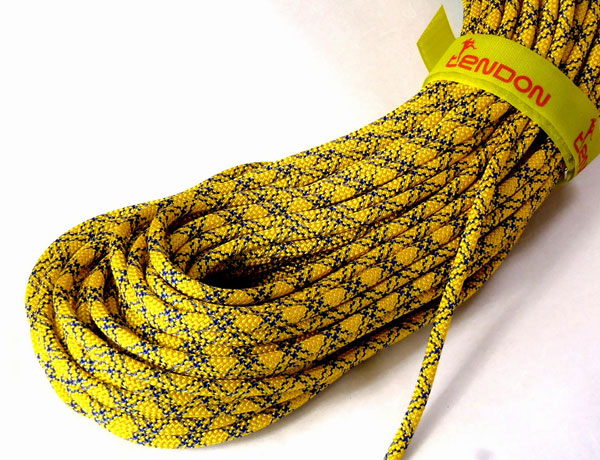
Various opinions have been expressed, such as “We can’t work without a safety block” and “A rope would be better.” It’s good to have a variety of opinions.
I suppose this is the time to combine those elements to find a method that’s safer and easier to implement.
See you later.