Hello, everyone.
This is Enta.
Are you implementing safety management?
I wrote an article like this before.
When I wrote this, a director somewhere told me, “That’s exactly right!” and,
A coach somewhere told me, “Can’t you even remember something this simple?” and,
We received a variety of responses.
I think it's okay for everyone to have their own opinion.
The way we think and feel.
But I'm sure there are some of you thinking, "Come on, don't get so mad lol" lol
So,
You'll Know It the Moment You Get to the Site! 6 Key Points for Hazard Recognition!!
Since this is the simplest and easiest to understand, I’m going to try to think about it in a more paradoxical way to see if I can simplify it even further.
- What stands upright will fall.
- Objects that are suspended will fall.
- Things that are high up fall.
- Round objects roll.
- You can get caught between moving objects.
- You can get caught up in something that's spinning.
These areBasics of Safety ManagementI think that's very important.
By considering counterintuitive measures, we can reaffirm the importance of safety management.
-
I believe that what stands upright will not fall.
- Overconfidence that things won't fall over.
- Countermeasures:Always take into account the possibility that objects may fall, and secure and arrange them appropriately.
-
Assume that suspended objects will not fall.
- I feel relieved when the suspended load doesn't fall. (And when the wires and such are secure, too.)
- Countermeasures:Anticipate the possibility of suspended loads falling, and ensure that safe lifting methods are strictly followed and that a safe work area is maintained.
-
I think that things that are high up won't fall.
- Underestimating the risk of objects falling from heights. (Overconfidence that they are securely fastened.)
- Countermeasures:When working at heights, take measures to prevent objects from falling and restrict access to the area below.
-
I think round objects don't roll.
- Ignore the risk of round objects rolling. (Overconfidence that they are secured.)
- Countermeasures:Install stoppers to prevent round objects from rolling away and implement safe storage methods.
-
I assume that moving objects won't get me pinched.
- They underestimate the risk of being caught in moving machinery or parts.
- Countermeasures:Avoid approaching the moving parts of machinery, and use safety devices and guards properly.
-
I assume I won't get caught up in anything that's spinning.
- Underestimating the risk of being caught in rotating machinery.
- Countermeasures:Stay away from rotating parts, use appropriate protective gear, and be mindful of your clothing.
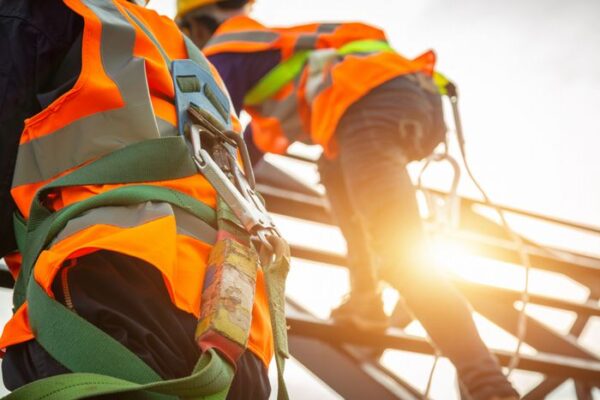
Keep Safety Management SimpleThat way of thinking, (in my personal opinion),
By thoroughly implementing basic hazard prediction—which is often taken for granted—
This can prevent many accidents from occurringThat's what I think.
On-siteWhen it comes to safety management,Avoid overconfidence that “things are always safe,” and
Always assume the worst-case scenariois important.
A Paradoxical PerspectiveBy having,Recognizing potential risks and taking appropriate measuresMaybe I'll be able to do that?
That's what I think.
A slightly unconventional way of thinking can come in handy sometimes.
Especially when it comes to safety.
Why don't you all try to think of a simple—and slightly mischievous—safety incident?
I think this could be useful for safety training, too ^^
See you later.