Hello, everyone.
This is Enta.
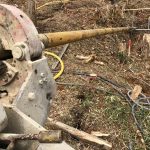
The other day, we installed a drain at the company's storage yard.
That said, all I really did was dig a hole with a rotary hammer and fill it with crushed stone, lol.
This area used to drain well, but it seems the soil has compacted over time, causing drainage to become poor.
This time, we drilled a hole about 10 meters deep and filled it with crushed stone.
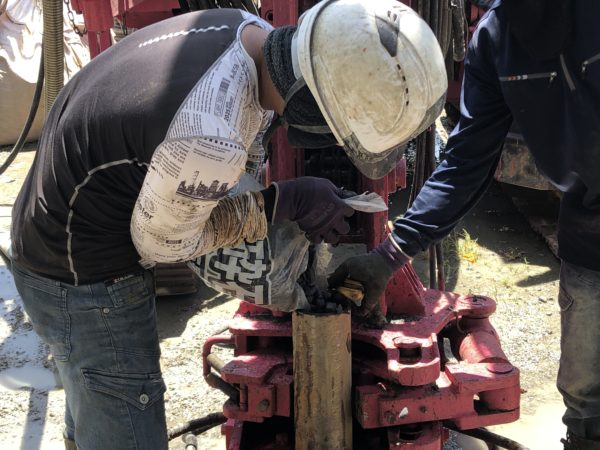
After retrieving the liner, fill the casing completely with crushed stone and pack it down while striking it with the machine's hammer.
Repeat this process, and after retrieving the casing, secure it in place with an iron pin.
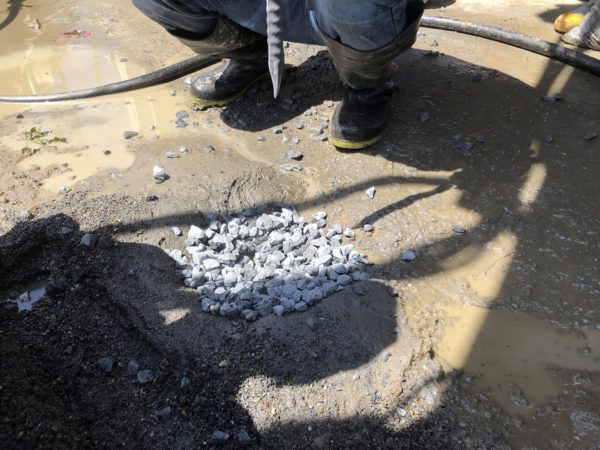
And that completes the drain.
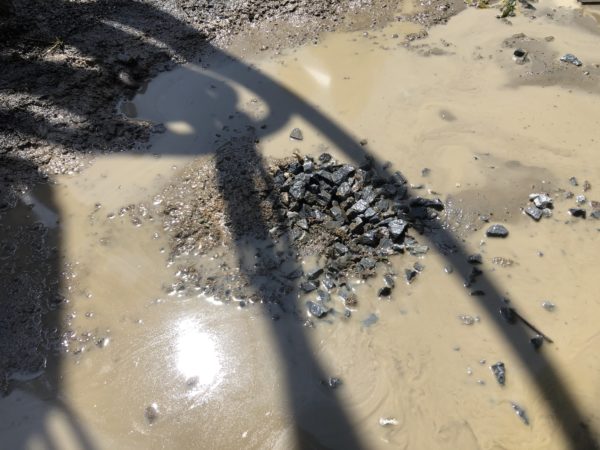
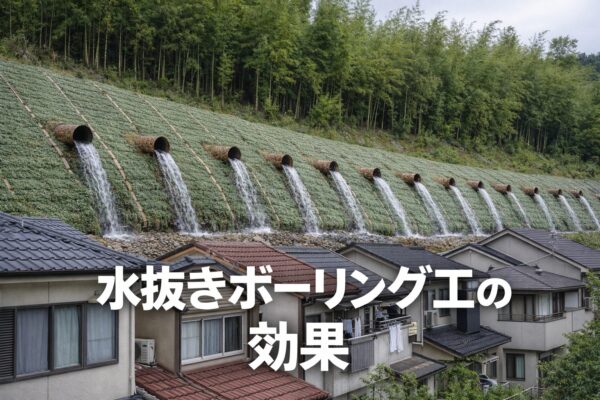
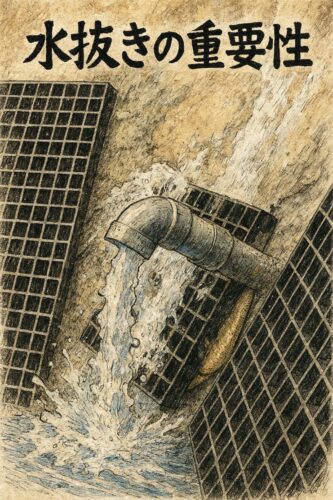
Just this alone is enough for it to soak up the surrounding water like crazy. (I’ll share a video next time.)
It works like a charm on rainy days.
This is the crushed stone version of sand compaction, and it appears to be used as a support pile these days.
In fact, simply installing these in a few places helps prevent liquefaction and makes the area less prone to flooding.
There used to be almost no flooding, but there is now, isn't there?
That’s because the ground—due to asphalt and other materials—has become less able to absorb water.
Just by taking these measures, the water level won't rise, and the water will be absorbed into the ground.
Furthermore, it is exceptionally effective at dissipating water pressure during liquefaction.
I feel that going forward, we’ll need to start adopting these kinds of slightly unconventional construction methods (which are used in residential construction).
I suppose slope stabilization isn't the only thing we can do when it comes to disaster prevention construction, is it?
See you later.