

Hello, everyone.
This is Enta.
It’s starting to get cold here on Honshu, too. I mean, it is November 1st, after all.
I'm still in my 40s, but I've been feeling the cold more easily lately lol.
Young people say they don't feel cold—could it be because body temperature drops slightly as we get older??
The solution is to dress warmly and wear layers.
By the way, if you have a job like ours where you work up a sweat, HeatTech is a big no-no!
The Challenger of the Cutting Wheel (Part 3)
I've written a little about that here.

Also, since there were some differences in how it was phrased, I thought I'd share it lol
What's the difference between "steteko," "momohiki," "zubon-shita," and "patchi"?
But that's beside the point.
The Crack SeriesThat's it.
Up until the last time,
1. Spraying during periods of extremely high temperatures
2. The rock lines in the rock section and the sedimentary section were clearly visible.
3. Overhang (a section of a rock face where the slope extends over your head like a roof overhang.)
4. There was some spray loss.
5. Plastic spacers.
6. After spraying, the pile slid down.
7. The temperature drops to 0 degrees at night (below freezing).
8. The sand is bad.
7. The temperature drops to 0 degrees at night (below freezing).
The coming season is going to be crazy.
During the winter, there are definitely areas where freezing causes cracks to form.
That's because as long as there are no cracks in the newly applied mortar, there's no problem. For now, anyway.
You need to be careful if they say they're about to start work.
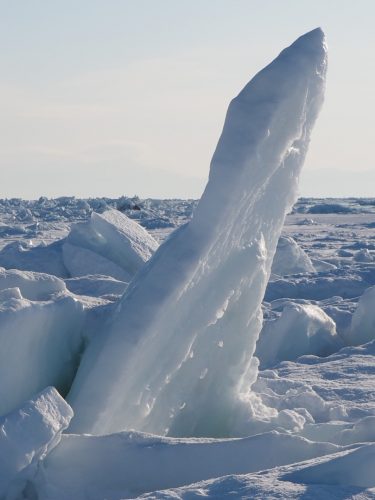
Cracks that form during construction are caused by freezing.
Mortar and similar materials typically freeze when the temperature drops below -0.5 to -2°C.
Cracks form when the water mixed into the dough freezes.
I’ve heard that when water freezes, its volume increases by about 9%.
If this happens every day, it will easily crack given the hardness of the mortar.
You’ve probably noticed that large rocks found in nature are often cracked, right? It’s possible that those cracks were caused by freezing.
No one can see what's possible, lol
Freeze-thaw cycles also play a role in weathering in nature.
In nature, freezing causes boulders of that size to shatter. (How many tens of thousands of years does it take for them to shatter?)
That’s just how destructive freezing can be.
I often do thisMeasures to Prevent FreezingThere is.
1. Use hot water.With hot water
2. Use fast-setting cement.
3. Use antifreeze.
Among these,Options 1 and 2 are valid.That's it.
1. It is necessary to use hot water to increase the initial setting rate and the initial strength.
Raising it significantly at the initial stage prevents freezing.
2. Using fast-setting cement increases the heat of hydration, which helps prevent freezing. It also increases early strength, and
The curing speed also increases.
3. I don't recommend this. It reduces strength and makes freezing highly likely.
I haven't conducted any experiments myself, but there is a...Data from experiments conducted by public agenciesI have one.
I won't make this public because it would interfere with business. If you really want to know, come by and I'll show you lol.
This concludes the Crack series.
Well, there are all sorts of cracks, but one thing I can say for sure is that cracks will definitely form.
This is especially true for small-cross-section structures, such as sprayed mortar and concrete, that we construct. The same applies to formwork.
Because it has a small cross-sectional area, it is susceptible to external factors.
That’s exactly why it’s important to be aware of the various ways to deal with it.
How can you prevent cracks that are bound to form? How should you repair them?
See you later.
Why Do Cracks Form in Mortar? (Part 1)
Why Do Cracks Form in Mortar? (Part 2)
Why Do Cracks Form in Mortar? (Part 3)
Why Do Cracks Form in Mortar? (Part 4)