


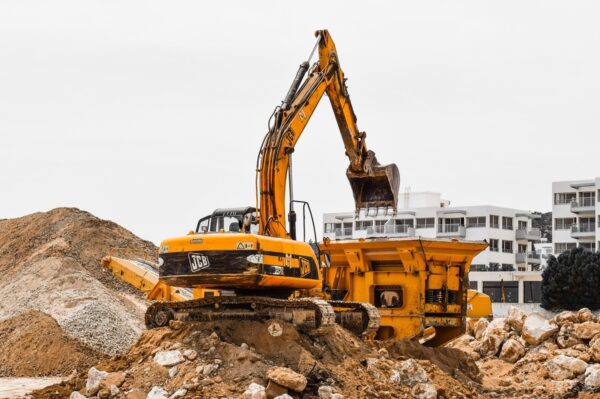
Heavy machinery plays a major role at demolition and construction sites. Although we refer to it simply as “heavy machinery,” there are actually many different types. There are also several different names for them, and many people may find these differences confusing.
In this article, we’ll explain the different types of heavy equipment, their characteristics, how to choose the right one, and the licenses required to operate them.
What is heavy equipment?
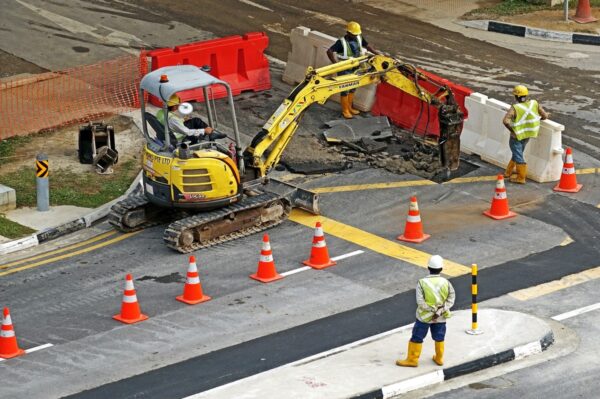
"Heavy machinery" refers to powered machinery used at construction sites that is operated by one or two people. It is used for tasks such as excavation, various types of material delivery, snow removal, transportation, material removal, and demolition.
Because they are powered by engines, they can perform tasks many times faster than humans can. Although they are sometimes confused with “construction machinery,” the distinction is actually vague.
In this section, we’ll introduce the names and uses of heavy machinery.
The Difference Between Heavy Equipment and Excavators
You often hear the term “Yunbo.” A Yunbo is one of many types of heavy machinery, and its official name is “hydraulic excavator.” It is also known as a power shovel, backhoe, or excavator.
Since they perform tasks such as “digging” and “excavating”—which are common on construction sites—they can be considered the workhorses of heavy equipment. Although they go by various names, there is no clear distinction between a “yunbo” and a “power shovel.” Strictly speaking, “yunbo” and “power shovel” are simply alternative names for a hydraulic excavator.
Why is it called a "yunbo"?
Even though the official name is “hydraulic excavator,” why is it often called a “yumbo”?
The reason for this is the name of the first product introduced in Japan. The model manufactured using technology provided by the French company Sicam was named “Yumbo.”
As the name became widely known alongside this product called “Yumbo,” the term “Yumbo” became firmly established. Similarly, terms like “power shovel” and “shovel car” also gained widespread recognition as product names, leading people to mistakenly believe they were model names.
Uses of Heavy Equipment
Heavy equipment is used for a variety of purposes, including not only excavation and transportation but also lifting materials and grading land. The types of heavy equipment and their main uses are as follows.
| Model | Uses |
| Hydraulic Excavator | Excavation, Lifting, Demolition, Industrial Waste Sorting, and Site Grading |
| Wheel Loader | Loading, Hauling, and Snow Removal |
| Crane | Suspension Work |
| Dump Truck | Loading and Hauling Operations |
| Motor Grader | Site Preparation and Snow Removal |
Heavy Equipment Mechanisms and Attachments
Heavy machinery is primarily powered by diesel engines. In recent years, environmentally friendly hybrid models have also appeared on the market.
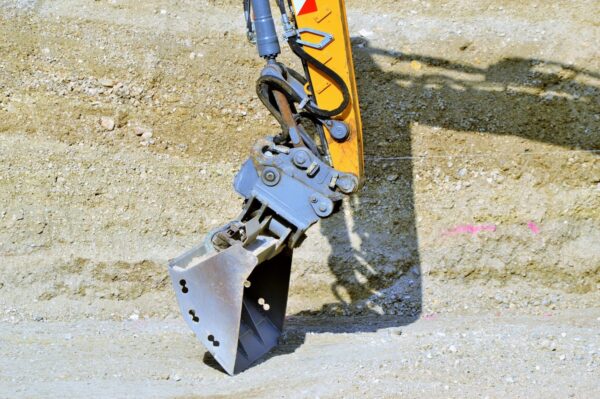
Heavy machinery uses hydraulics to lift materials that are too heavy for humans to handle. There is a wide variety of attachments available, and they can be swapped out. This combination of hydraulic power and a wide range of attachments is why heavy machinery can perform various tasks many times faster than humans.
From here on, we’ll take a closer look at the mechanisms of heavy machinery and the different types of attachments.
The Three Mechanisms That Make Up Heavy Equipment
Heavy machinery, such as hydraulic excavators, is generally composed of three main components: the working mechanism, the upper rotating assembly, and the lower travel assembly.
The upper rotating body is the part that operates the machine and houses the engine compartment and counterweight. This counterweight prevents the machine from tipping over.
The undercarriage is the running gear of the heavy machinery. The left and right tracks can be moved independently, allowing the machine to not only move forward but also turn.
The work arm is the part that actually performs the detailed work; in human terms, it is equivalent to the arm. Attachments are mounted on this part.
Heavy Equipment Attachments
A key feature of heavy equipment is its ability to handle a wide variety of tasks using various attachments. The main attachments include the following:
| Attachment | Features |
| Bucket (Shovel) | This is a standard attachment used for excavating and loading soil and for grading. Some models feature a lattice-style bottom to allow for screening. |
| Grapple (Fork) | It can be used to lift materials by clamping them. It is used for demolition and sorting. |
| Breaker | This attachment delivers hammer-like blows to crush hard objects. |
| Crusher | This is an attachment that crushes materials by clamping them between its large claws. |
| Cutter | This is an attachment for cutting steel beams. It is used in demolition and scrap metal processing. |
| Magnet | You can use the force of a magnet to lift iron. |
| Vibro Hammer | This is an attachment used for driving piles. It is used for soil improvement and foundation work. |
In addition, there are attachments for mowing and forestry, as well as attachments for digging holes that come with a drill.
Purchase of Heavy Equipment
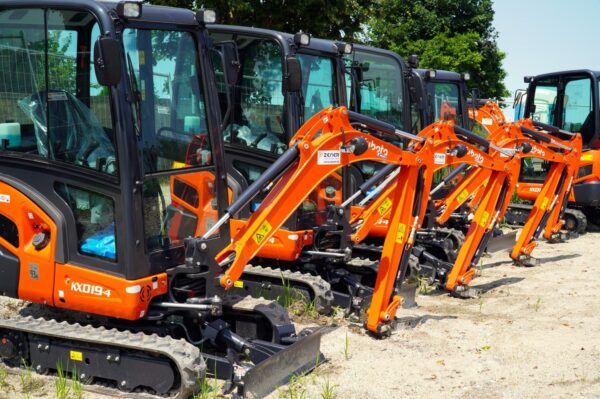
When purchasing heavy equipment, how should you go about choosing it? While there is a wide variety of heavy equipment available worldwide, Japanese-made models are particularly popular.
The reason for its popularity is its high quality, which means it rarely breaks down and lasts a long time. This high quality also contributes to the large number of used items on the market.
In the following section, we’ll introduce heavy equipment manufacturers and their features, and explain in detail how to choose the right one from among them.
Heavy Equipment Manufacturers and Their Features
Heavy equipment manufacturers include Komatsu and Caterpillar Japan. Let’s take a look at the major manufacturers and their respective features.
| Manufacturer | Features |
| Komatsu | The company holds the No. 1 market share in Japan as a construction equipment manufacturer and has made a name for itself with its power shovels. It is known for its wide range of products, which includes hydraulic excavators, wheel loaders, bulldozers, and motor graders, as well as forklifts and harvesters. |
| Caterpillar Japan (CAT) | This U.S.-based heavy equipment manufacturer holds the No. 1 market share worldwide. It offers a full line of hydraulic excavators, wheel loaders, bulldozers, dump trucks, and motor graders. |
| Kubota | We handle mini backhoes, wheel loaders, and carriers. As a manufacturer specializing in small construction machinery, our mini backhoes come in three types: rear-swing, ultra-compact swing, and standard models. We boast the world’s No. 1 market share in industrial diesel engines rated at 100 horsepower or less. |
| Hitachi Construction Machinery | This manufacturer specializes in hydraulic excavators. It also offers wheel loaders, environmental and recycling equipment, and road construction machinery. |
| Yanmar | We are an agricultural machinery manufacturer, but we also handle heavy equipment such as small hydraulic excavators, wheel loaders, and carriers. |
How to Choose Heavy Equipment
When selecting heavy equipment to purchase, be sure to check the specifications before making a decision to avoid buying multiple machines that can perform the same tasks. Assess the types of work the equipment can handle based on factors such as bucket capacity, operating range, digging force, and rated power.
Since each manufacturer offers specialized products, choosing the heavy equipment best suited for the job—rather than limiting yourself to a single manufacturer—will help improve work efficiency.
To Operate Heavy Equipment
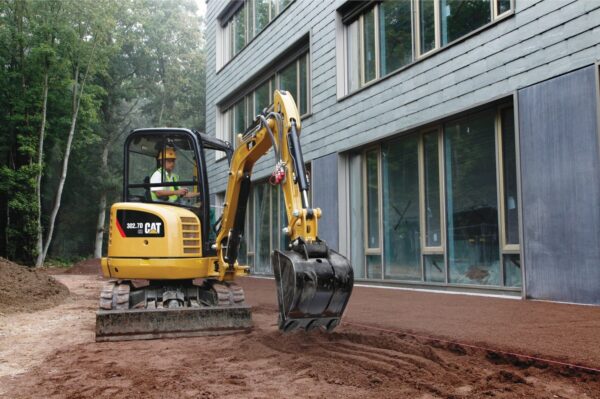
A license is required to operate heavy machinery. Under the Industrial Safety and Health Act, individuals performing hazardous work are required to complete a training course for the purpose of preventing workplace accidents. Penalties apply not only for violations of this requirement but also for failing to carry the certificate of completion.
In the following section, we’ll cover the certifications required to operate heavy machinery, how to obtain them, and important points to keep in mind.
Qualifications Required to Operate the Equipment
The qualifications required to operate heavy machinery vary depending on the type of machinery. Here, we’ll outline the minimum qualifications required.
| Qualifications | Models and Tasks Supported |
| Forklift Operator Training Course | Forklifts, Carriers, Top Lifters |
| Skill Training Course for Operating Backhoe Loaders, etc. | Backhoe Loaders and Forklift Loaders |
| Small Mobile Crane Operator Training Course | Small Mobile Crane |
| Operating Skills Training Course for Vehicle-Mounted Construction Machinery (for Grading, Hauling, Loading, and Excavation) | Hydraulic excavators, wheel loaders, tractor excavators, bulldozers, bucket excavators, pile drivers |
| Operating Skills Training Course for Vehicle-Mounted Construction Machinery (for Demolition) | Equipment fitted with demolition attachments such as crushers, breakers, and steel-cutting machines |
| Operating Skills Training Course for Vehicle-Mounted Construction Machinery (for Foundation Work) | Pile Drivers, Vibrators, Earth Drills, Earth Augers |
| Off-Road Vehicle Driving Skills Training Course | Crawler-Type Off-Road Transport Vehicles and Tire-Type Off-Road Transport Vehicles |
| Aerial Work Platform Operator Training Course | Boom-Type Aerial Work Platforms and Vertical Lift Aerial Work Platforms |
The Path to Certification
You can obtain heavy equipment operator certifications by attending skill training courses offered by heavy equipment manufacturers’ training centers or other organizations. To obtain a certification, you must pass both a written exam and a practical exam.
You may take the written exam after completing the required number of hours of written instruction. After passing the written exam, you will undergo practical training. Following the required number of hours of practical training, you will take the practical exam; you will only obtain your certification after passing that exam.
The course schedule varies depending on the type of certification and the certifications you already hold, so be sure to check in advance.
Important Notes Regarding Licenses
Licenses specifically for heavy machinery are strictly limited to operating and driving such equipment on construction sites. Please note that you will need a driver’s license to drive on public roads.
In addition, if your certification has expired, it can be reissued. Please check with the organization where you took the skills training course. If you have forgotten which organization you took the course at, please check with the Labor Bureau of your local municipality.
Learn About the Features of Heavy Equipment and Choose the Right One for Your Company
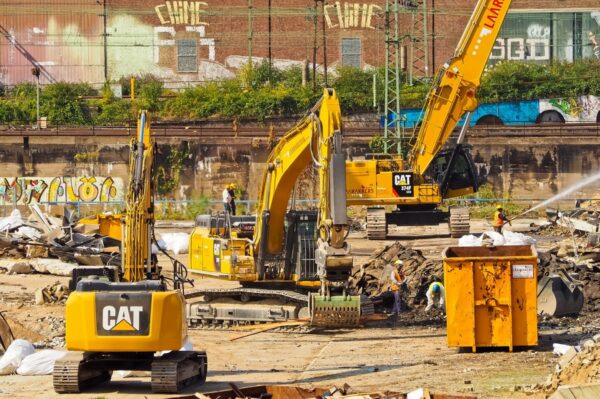
In this article, we introduced the different types of heavy equipment and their respective features. By understanding the characteristics and attachments of each type of heavy equipment, you can choose the one that best suits your needs.
Furthermore, understanding the certifications required to operate heavy equipment not only helps you avoid penalties but also helps prevent workplace accidents. Please select heavy equipment that suits your company’s needs based on accurate information.