Hello, everyone.
This is Enta.
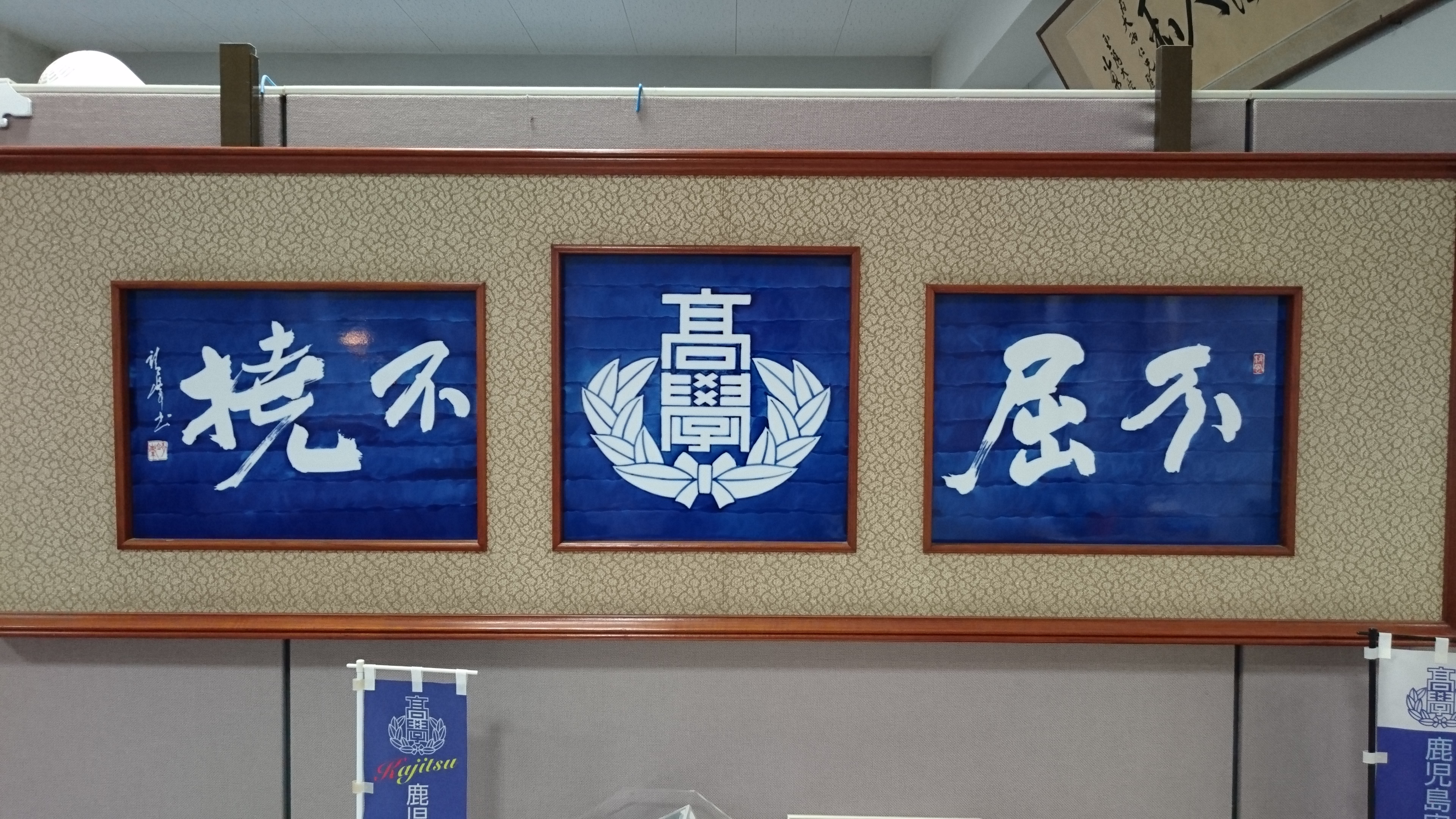
I visited my alma mater, Kagoshima Jitsugyo High School.
Back when I was there, it was an all-boys school with very strict rules, and at the time it felt like hell, but,
It has now been transformed into a beautiful co-ed school and has a bright, cheerful atmosphere.
And,
I'm 40 now, but I still get scolded by my teacher...
It's great to be in an environment where people call you out on your mistakes lol
That night, my teacher, classmates, and underclassmen got together and had a blast reminiscing about the past lol.
It occurred to me then that my junior remembered it, but I didn't. (And vice versa.)
I became convinced that other people know everything about me.
Be kind to people, huh!! lol
But that's beside the point.
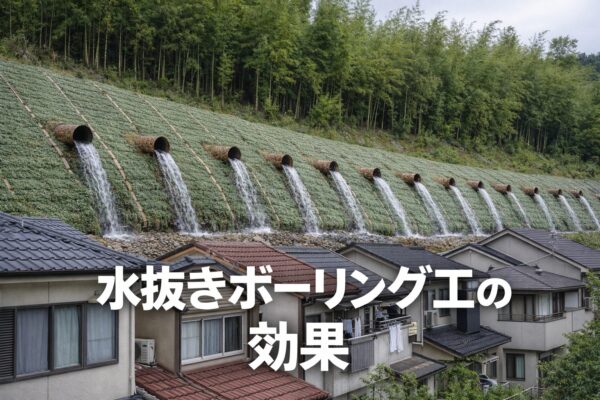
Challenges Encountered During Drainage Boring Construction
1. The water flow is high, causing the perforated pipe to rise due to water pressure.
2. Jamming makes drilling difficult
3. The natural ground collapses immediately, making it impossible to insert the support pipe.
4. The Slime Isn't Coming Back
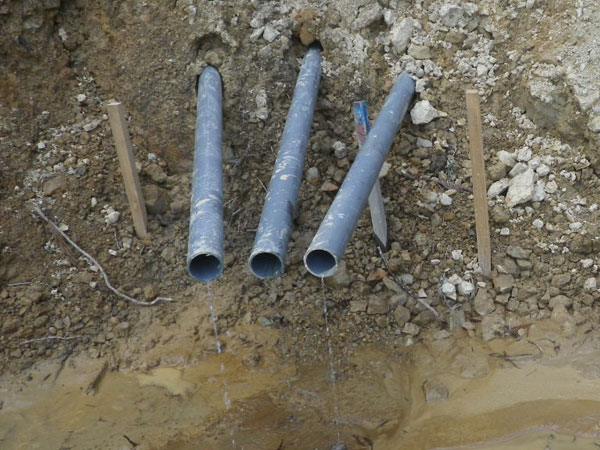
Countermeasures
1. The water flow is high, causing the perforated pipe to rise due to water pressure.
When the casing was retrieved, the perforated pipe came down with it, and since it won't go back in even when pushed, that means...
This is standard practice in dewatering drilling.
You can push it to a certain extent if it's an SGP pipe (gas pipe), but it will crack if it's a VP pipe (PVC pipe).
So, proceed as shown in the figure.
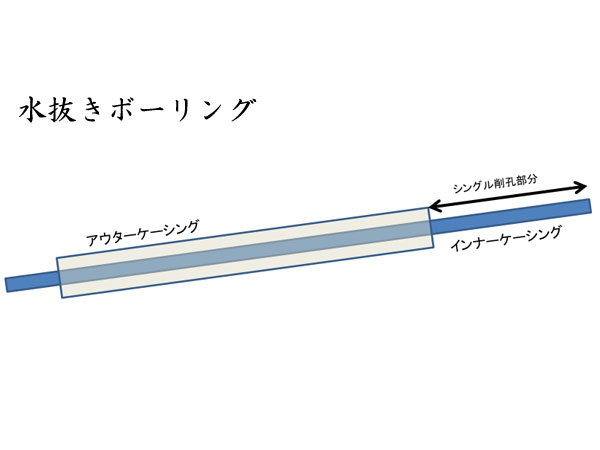
Once the outer casing has reached the designed drilling depth,
Drill a single borehole about 1 meter deep using an inner casing.
After removing the inner casing, insert the perforated VP pipe.
At that point, insert it into the single-drilled hole.
Doing so reduces friction, making it less likely to come loose.
Since the perforated pipe extends farther than specified in the design,
If you're concerned, you might want to make it longer in advance.
However, there are also well-preservation pipes on the entrance side, and
Even if it's set back a little, there are no structural issues.
2. Jamming makes drilling difficult
| What Is Jamming? This refers to a condition in which the drilling unit of a drilling machine becomes stuck inside the borehole and is unable to rotate. Possible causes of constriction include bore wall collapse or extrusion, bore wall bending, poor water supply, and slime buildup. A Dictionary of Civil Engineering and Construction Terms for Use on the Job Site |
In this case, the quickest solution is to use a machine that’s one grade higher.
Most of the time, that’s not possible, but,
Drilling with muddy water makes the drilling process relatively easier.
It's also easy to remove the slime, but for those with no installation experience,
If you're inexperienced, please don't do this.
Addition of bentonite to drilling fluid,
We incorporate high-molecular-weight polymers, such as Super Coat, into the mixture.
You can use about half the usual amount without any problems.
After drilling is complete, remove the inner casing and circulate water while rotating the outer casing,
Please wash the inside of the hole thoroughly.
If you don't, the muddy water may clog the strainer.
(It won't actually get blocked, but just to be safe.)
3. The natural ground collapses immediately, making it impossible to insert the support pipe.
There's nothing we can do about this, so we have no choice but to use a machine to press it.
Anyway, the key is to just push straight ahead, lol.
4. The slime hasn't come back.
This is also unavoidable, but drilling with muddy water makes it easier for the cuttings to come back up.
Buoyancy also makes it easier for the slime to rise.
Actually, it's fine if you don't come back.
I'm actually glad there's no slime cleanup lol
See you later.