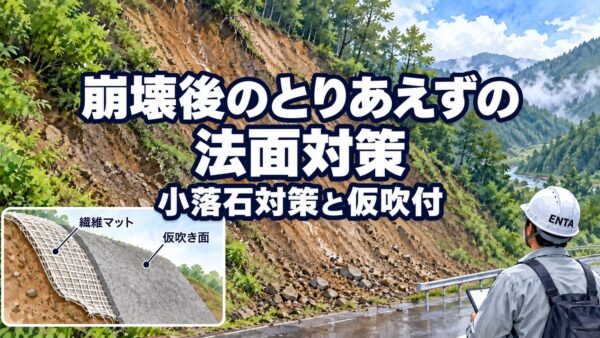


Hello, everyone.
This is Enta.
Since my work at the Tokyo site is done for now, I headed straight to Azumino.
So, I'm in Azumino right now.

Azumino City is such a great place!
It's rich in nature, and I think it's the best place to raise children.
We have dorms available even for single people, so why not come work with us?
Would you like to do a job you'll enjoy?
Just a quick job posting lol
But that's beside the point.
Why do we drive in grounding rods?
One of my younger kids told me that!
So, everyone, can you give a clear and concise answer?
By the way, I've been a pro in this field for 20 years!

Well, I managed to explain it somehow, even though I was stumbling over my words! ...I think...
I said that, basically, it’s because you won’t get an electric shock, but is that actually true??
I was a little worried about that, so I looked into it.
You were right about it being to avoid getting electrocuted! lol
In reality, if a machine or other device has an electrical leak and isn't grounded, anyone who touches it will get an electric shock.
If there is no ground connection, and the machine itself is leaking current, this means the machine is electrically charged.
By installing a ground connection there, the electricity will flow into the ground, preventing electric shock.
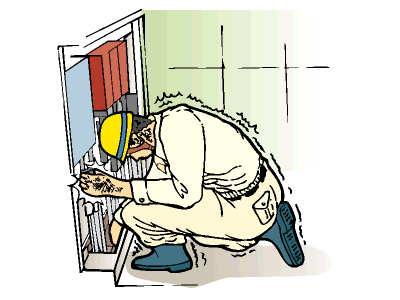
So why do we get an electric shock? Well,The insulation is not perfectThat's the point.
You probably think that insulation in machinery and such is perfect, right?
But they do degrade due to UV rays and other factors. It’s actually quite easy for water to get inside them.
If there's a big temperature difference, condensation will cause it to get wet on its own.
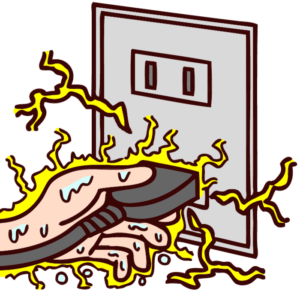
That just means it’s impossible to achieve perfect insulation. Especially since we use the equipment outdoors!
The key to using something that isn't perfect is to take precautions.
As long as the grounding rod is properly installed, the circuit breaker (ground fault circuit interrupter) will trip as soon as a ground fault occurs.
Electricity flows into the ground, so you won't get electrocuted!
That's really all there is to it, isn't it?
But there are a lot of contractors who don't install grounding rods just because they find it too much trouble, even though it's just a matter of driving one into the ground!
Grounding rods are now a rule of the trade.
Just as you wash your face and brush your teeth every day, you should drive a ground rod into the ground once you've installed a generator.
Doing the obvious things in an obvious wayThat's all there is to it.
Please drive those grounding rods into the ground as fast as you can to protect yourself!
If a young person asks you about it, please make sure to explain it to them clearly (lol)
See you later.