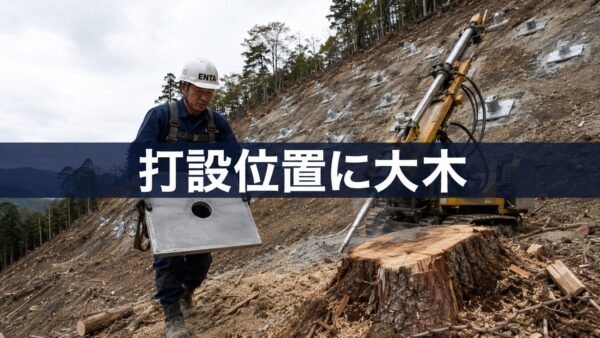
Hello, everyone.
This is Enta.
I've been in Kagoshima for the past few days.
Well, since it's my hometown, I guess you could say I'm here—or rather, I've come back.
It’s been over 20 years since I left Kagoshima, so the atmosphere has completely changed without me even realizing it—it’s like a town I don’t know anymore.
So, this time, we’re celebrating a former teacher from my alma mater, Kagoshima Jitsugyo High School.
And even though I'm over 40, I'm still getting scolded by my teacher lol
It’s been a while since I’ve seen my juniors and seniors—it’s so nice to catch up with them, and we just can’t stop talking.
In the end, for some reason, there was a huge commotion at the club!

It reminded me of those days.
It's nice to do something like this every once in a while.

But that's beside the point.
This impact wrench has a torque of 175 N·m.
1 kg = 9.80665 N
175 N ÷ 9.80665 = 17.85 kg
Torque is the rotational force applied to a bolt.
The torque when a force of 175 N (17.85 kgf) is applied with a 1-meter-long wrench is
This is 175 N·m (approximately 17.85 kgf·m).
In rock bolting, the cost estimate includes an item called “head tightening work.”
Basically, the items listed in the design document and the items that have been accumulated are
I have to manage everything.
Since the on-site conditions I, II, and III for the market unit price aren't specified, I think it's fine as long as we don't relax the standards too much.
In the case of double-pipe drilling where the cost is calculated on a unit-by-unit basis rather than using market unit prices,
I believe a head clamping tool is always included.
In that case, we'll submit the paperwork and implement torque control.
How to Calculate Torque


One thing to keep in mind here is the torque coefficient.
If you get this wrong, it will cause problems later, so please make sure you don't make a mistake.

*↑These are general torque coefficients. Please check with each manufacturer.
Calculation
T = k × d × P
1. Tightening torque = T
2. Verify that the design load (Td) equals P
3. Diameter of the bolt used = d
4. Torque coefficient = k
例
P = 18 kN = 18,000 N (design load)
Bolt diameter d = D19 = 0.019 m
Torque coefficient k = 0.4
P = 18,000 N × 0.019 m × 0.4 = 136.8 N·m
The tightening torque shall be 50% of the design load.
(*Rock Bolt Installation Cost Estimation Data (Reference), p. 24, National Association for the Protection of Specified Slopes)
Since it says that, 136.8 N·m × 501 TP3T equals 68.4 N·m = 69 N·m
That's how it works.
However,Low TdIn some cases, the bolt'sThe nut will come loose!
ThoroughlyTighten with a wrench until it is just tight enough not to come looseLet's do it!!
But if you tighten the nut too hard, the head will fly off!
(Though the kind of force needed to snap a rock bolt in half is absolutely insane, lol)
See you later.
Visual inspections alone aren't enough when checking machinery! Be sure to check for loose bolts!